
 Pin it
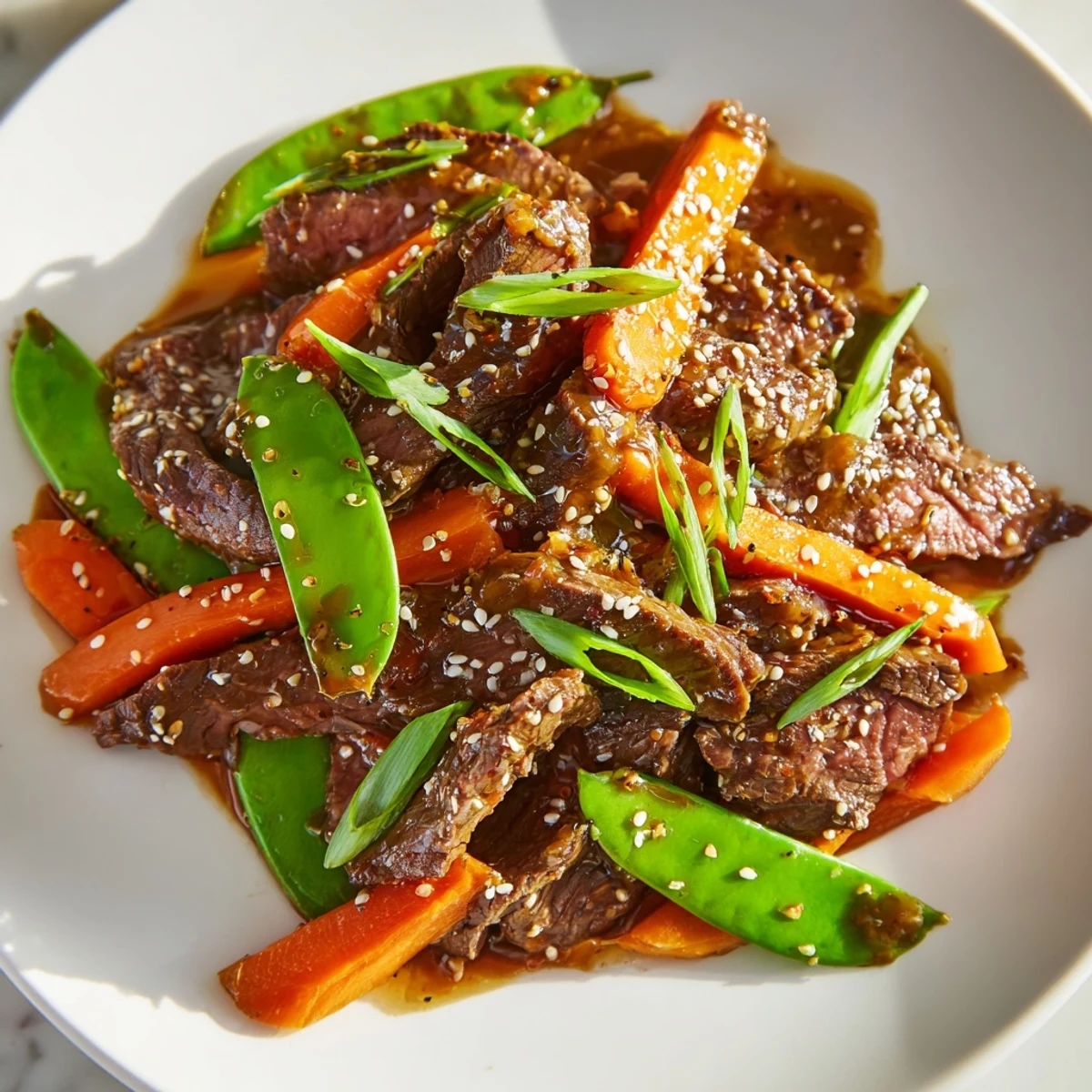
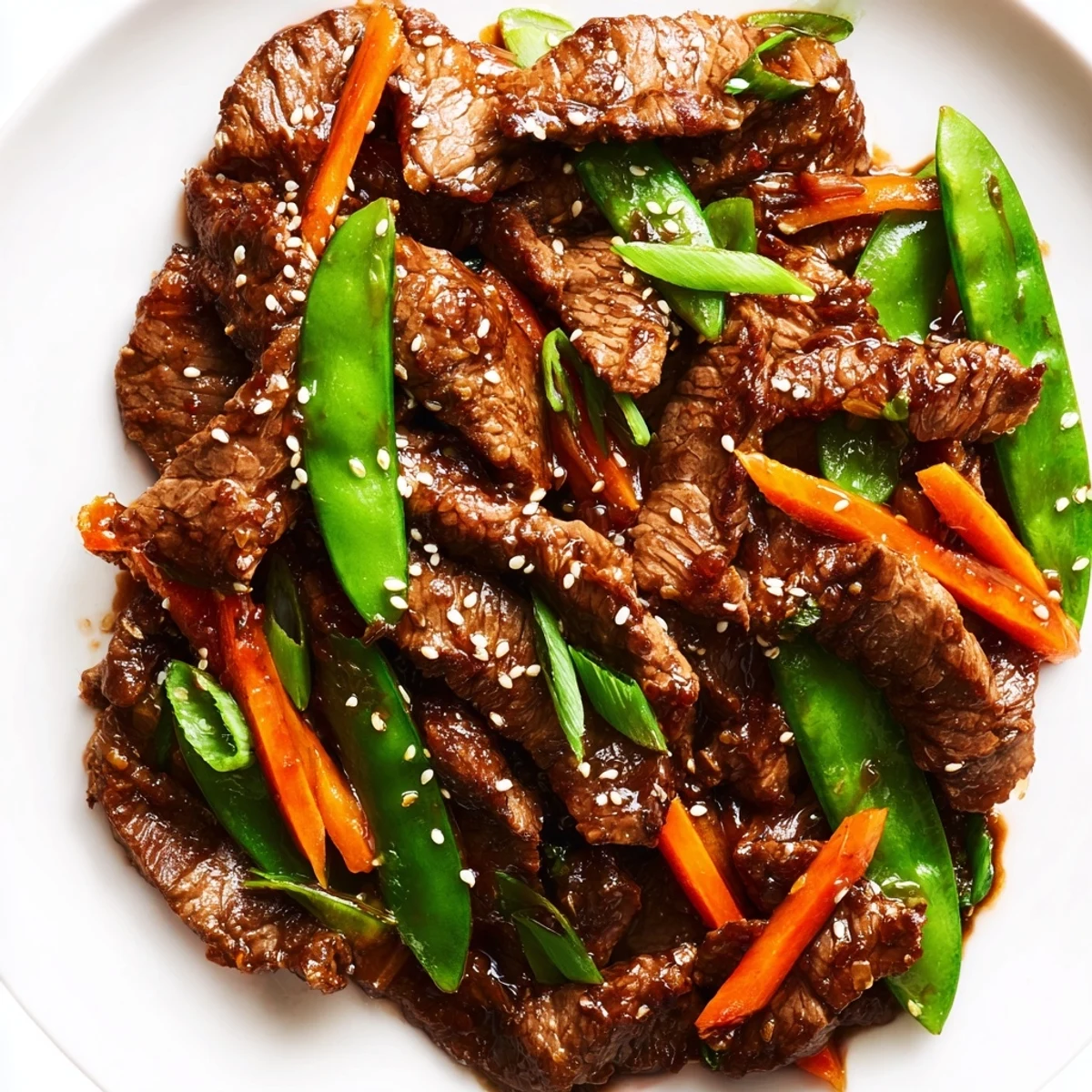
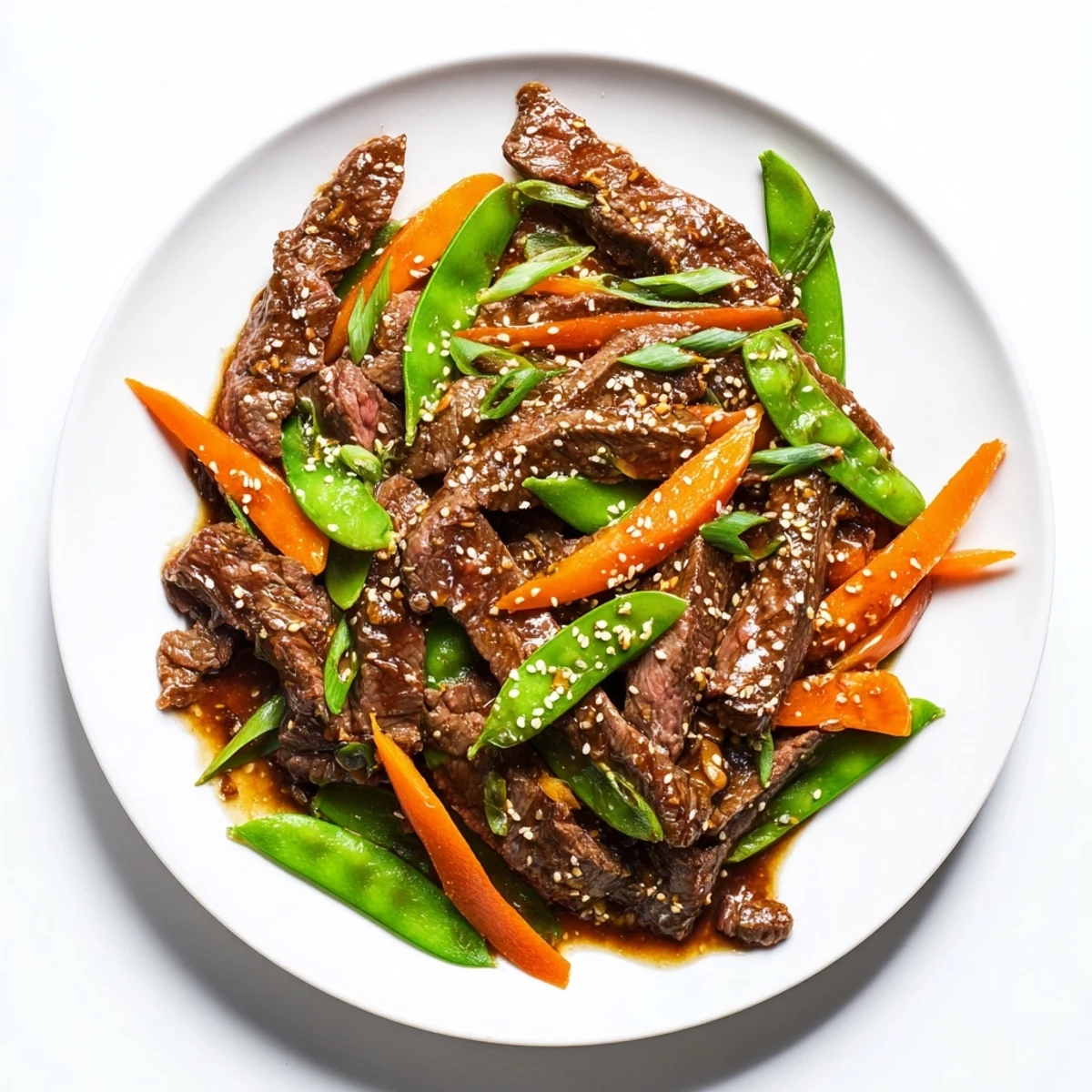
 This dish features tender slices of beef quickly cooked with crisp snow peas and thinly sliced carrots. A balanced Asian-inspired sauce blends soy, oyster, and sesame flavors with garlic and ginger, bringing a savory depth. The beef is marinated briefly for tenderness, then seared to lock in juices. Vegetables stay crisp-tender thanks to quick stir frying. Garnished with scallions and optional sesame seeds, it pairs perfectly with steamed rice or noodles for an easy, flavorful meal in under 30 minutes.
There's something about the sizzle of beef hitting a hot wok that makes everything feel more alive in the kitchen. My neighbor taught me this stir fry one evening when she caught me staring at sad takeout containers, and within twenty minutes I was hooked—not just on the dish, but on how simple it all was. The magic isn't in fancy technique; it's in slicing your beef thin, keeping your heat high, and knowing that crisp vegetables matter more than perfection. Now whenever I need dinner fast and want it to feel special, this is what I make.
I made this for my partner on a Tuesday night when everything felt heavy, and somehow the steam rising from the wok and the smell of ginger and garlic transformed the mood entirely. We sat at the counter with the pan still warm between us, and he said it tasted like someone who actually cared had cooked it. That's when I realized stir fry isn't just fast food—it's proof that care and speed don't have to be enemies.
Ingredients
- Flank steak, thinly sliced against the grain: Slicing against the grain breaks up the muscle fibers so the beef stays tender even with high heat cooking; I learned this the hard way after chewy stir fries.
- Cornstarch: This silent hero makes everything tender and helps the sauce cling; use it on both the beef and in the sauce.
- Soy sauce: The backbone of flavor—use a good quality one if you can, it makes a real difference in the final taste.
- Snow peas: They cook in minutes and stay crisp if you don't crowd the pan; their sweetness balances the savory sauce.
- Carrots: Bias slicing makes them cook faster and look more elegant, plus they catch the sauce beautifully.
- Oyster and hoisin sauces: These add depth and a subtle sweetness that makes people ask what your secret ingredient is.
- Fresh ginger and garlic: Don't skip these—minced small, they perfume the whole dish without overpowering it.
- Sesame oil: Just a drizzle at the end transforms everything into something that tastes intentional.
- Vegetable oil: High heat cooking needs an oil that can handle it without smoking; vegetable oil won't let you down here.
Instructions
- Coat and rest the beef:
- Toss your sliced beef with cornstarch and soy sauce—this creates a protective coat that keeps the meat tender through the high heat. Let it sit for ten minutes while you prep everything else; you'll notice the cornstarch starts to look tacky, which is exactly what you want.
- Build your sauce:
- Whisk all the sauce components together in a small bowl and set it where you can reach it easily. The cornstarch in here will thicken everything once it hits the heat, so don't skip it even if you think the sauce looks thin.
- Sear the beef with authority:
- Heat your wok or skillet until it's genuinely hot—you should feel warmth radiating from it. Add the beef in a single layer and let it sit without moving for a minute or two; this creates a golden crust that tastes incredible.
- Cook the carrots first:
- Remove the beef and add fresh oil to the hot pan, then add carrots before the snow peas since carrots need a couple extra minutes. You'll know they're ready when they're starting to soften but still have a slight bend to them.
- Add the snow peas and keep moving:
- Once the carrots are nearly done, add the snow peas and stir constantly for two to three minutes. This is where you're fighting to keep everything crisp, so don't step away from the stove.
- Bring it all together:
- Return the beef to the pan, pour in the sauce, and stir everything for just a minute or two until the sauce thickens and turns glossy. You should see it coat the beef and vegetables like a light glaze.
 Pin it
 My eight-year-old nephew watched me make this and announced that it was "fancy but not showing off," which might be the best compliment a home cook can get. That's what this dish is—impressive enough to make someone feel cared for, simple enough that you're not stressed in the kitchen.
Why This Stir Fry Works Every Time
The secret is committing to high heat and not wavering. When your pan is truly hot and you don't move things around obsessively, you get crispy vegetables and tender meat that tastes like restaurant food. I used to fuss constantly, stirring every two seconds, and everything came out soft and sad—letting things sit and sear changed everything.
Timing Is Everything Here
This whole dish happens in about fifteen minutes of active cooking, which is why prep matters so much. When I prep everything and line it up like a little mise en place before I turn on the heat, the actual cooking feels meditative instead of chaotic. There's something satisfying about knowing exactly when each ingredient hits the pan and trusting the process to work.
Making It Yours
Once you nail the basic technique, this dish becomes a canvas for whatever vegetables or proteins you have on hand. I've made it with broccoli instead of snow peas, chicken instead of beef, and even tofu when I'm eating lighter—the sauce and technique stay the same, and it works every time.
- A pinch of chili flakes or a sliced fresh chili adds heat without changing the fundamental flavor balance.
- Swap any vegetables you like; just remember that denser vegetables need a head start in the pan.
- Serve over jasmine rice or noodles to catch every drop of that glossy sauce.
 Pin it
 This stir fry has become my comfort food that happens to look beautiful, which feels like winning the kitchen lottery. Once you make it a few times, you'll find yourself reaching for it on nights when you need something fast but still want to feel proud of what you've cooked.