
 Pin it
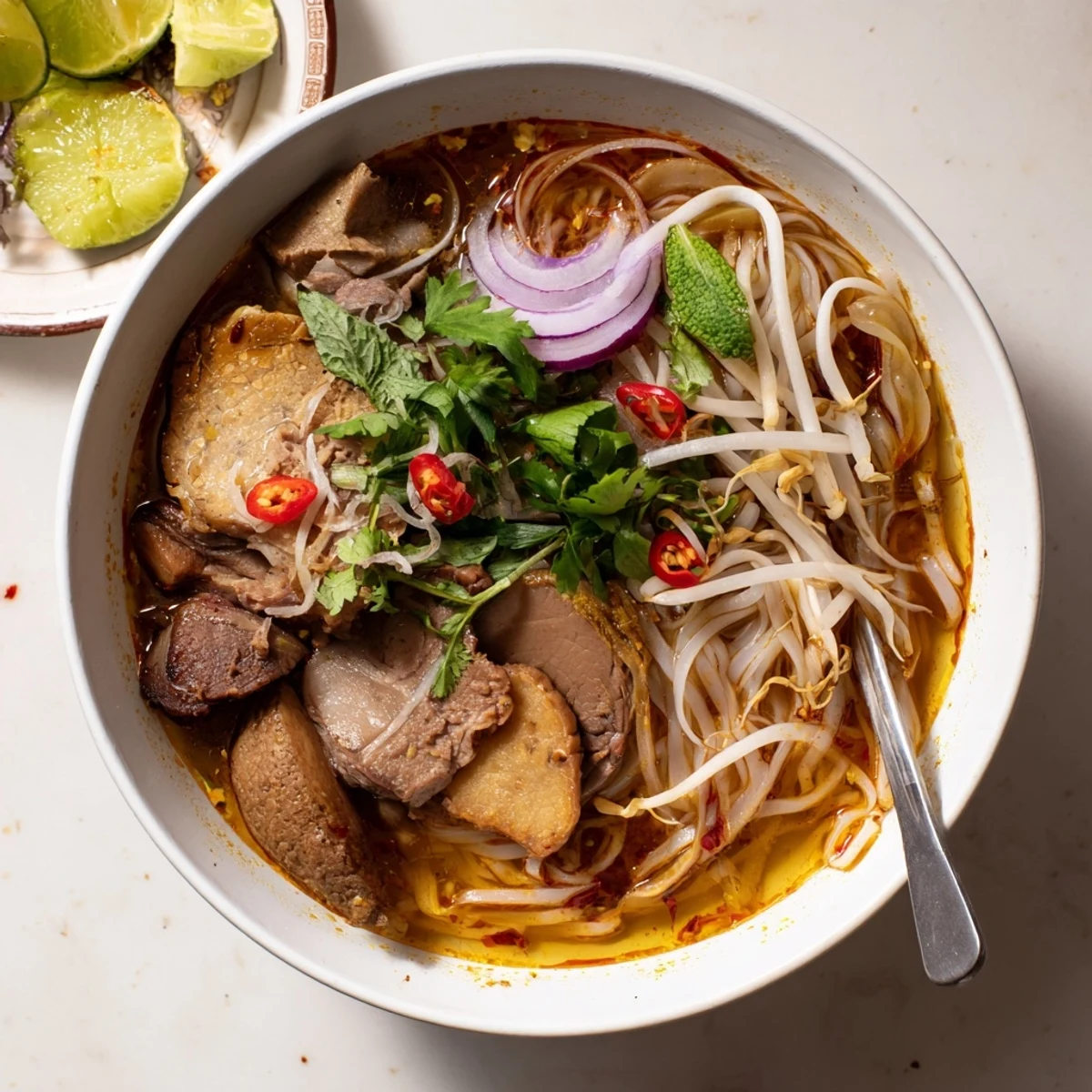
 Experience the bold flavors of central Vietnam with this aromatic noodle soup featuring a rich beef and pork broth infused with lemongrass, shrimp paste, and annatto oil. The deep red broth gets its signature color and complex taste from hours of simmering with beef shank, pork hock, and aromatic vegetables. Each bowl combines thick round rice noodles with sliced brisket, pork hock, and optional traditional blood cubes, all topped with vibrant fresh herbs, bean sprouts, banana blossom, and a customizable drizzle of spicy chili oil.
The kitchen filled with that unmistakable lemongrass perfume that only happens when you smash the stalks just right, releasing oils that cling to your fingers for hours. My roommate stumbled in from a night shift asking what restaurant Id ordered from, looking genuinely confused when I pointed to a pot that had been bubbling since dawn. Bun Bo Hue became my weekend project after a trip to Vietnam where every bowl seemed to tell a different story.
I once served this at a dinner party where one guest confessed they normally hate Vietnamese soup because of a bad pho experience years ago. They went back for thirds. The difference is in that aromatic chili oil, the way it swirls into the broth creating little rivers of red that carry the funk of shrimp paste and sweetness of rock sugar throughout every spoonful.
Ingredients
- Beef shank (bone-in): The bone creates depth, while the meat becomes meltingly tender after hours of simmering
- Pork hock: Adds collagen and richness that transforms the broth from simple to luxurious
- Lemongrass: Bruise it well with the back of your knife to release the citrusy oils that define this dish
- Shrimp paste: The secret ingredient that creates that authentic Hue flavor profile, use sparingly at first
- Thick rice noodles: The substantial texture holds up better in the spicy broth than thin vermicelli
- Annatto seeds: Optional but creates that signature reddish-orange hue without affecting flavor
- Rock sugar: Dissolves slowly and adds a rounded sweetness that regular white sugar cannot replicate
Instructions
- Build the foundation:
- Blanch beef shank and pork hock in boiling water for five minutes, then rinse thoroughly under cold water to remove any impurities that could cloud your broth
- Create the aromatic base:
- Combine meats with fresh water, smashed lemongrass, halved onion, garlic, and ginger in a large pot, bringing everything to a gentle boil while skimming any foam that rises to the top
- Simmer into soul:
- Lower heat and add fish sauce, salt, both sugars, and shrimp paste, letting everything bubble gently for two hours until the meat offers no resistance when pierced
- Craft the chili oil:
- Warm vegetable oil with annatto seeds until they release their red color, then sauté shallots and garlic before stirring in chili flakes for a fragrant, spicy finish
- Assemble with care:
- Layer cooked noodles in bowls, arrange sliced meats and sausage on top, then ladle the steaming broth over everything before finishing with that vibrant chili oil
 Pin it
 My Vietnamese grandmother-in-law once tasted my attempt and smiled, saying the broth reminded her of the street stalls near her childhood home in Hue. She taught me to add a tiny piece of pineapple to the pot, a trick that balances the fierce spice with subtle sweetness in a way I cannot quite describe but immediately understand.
Finding Balance in Spice
The heat in Bun Bo Hue should wake you up, not punish you. I learned to build the spice gradually, starting with the aromatic oil and letting diners add fresh chilies at the table. Some days I want a gentle warmth that lingers, other times I crave the kind of sweat-on-your-upper-lip intensity that clears your sinuses and makes your eyes water just enough to feel alive.
The Art of Assembly
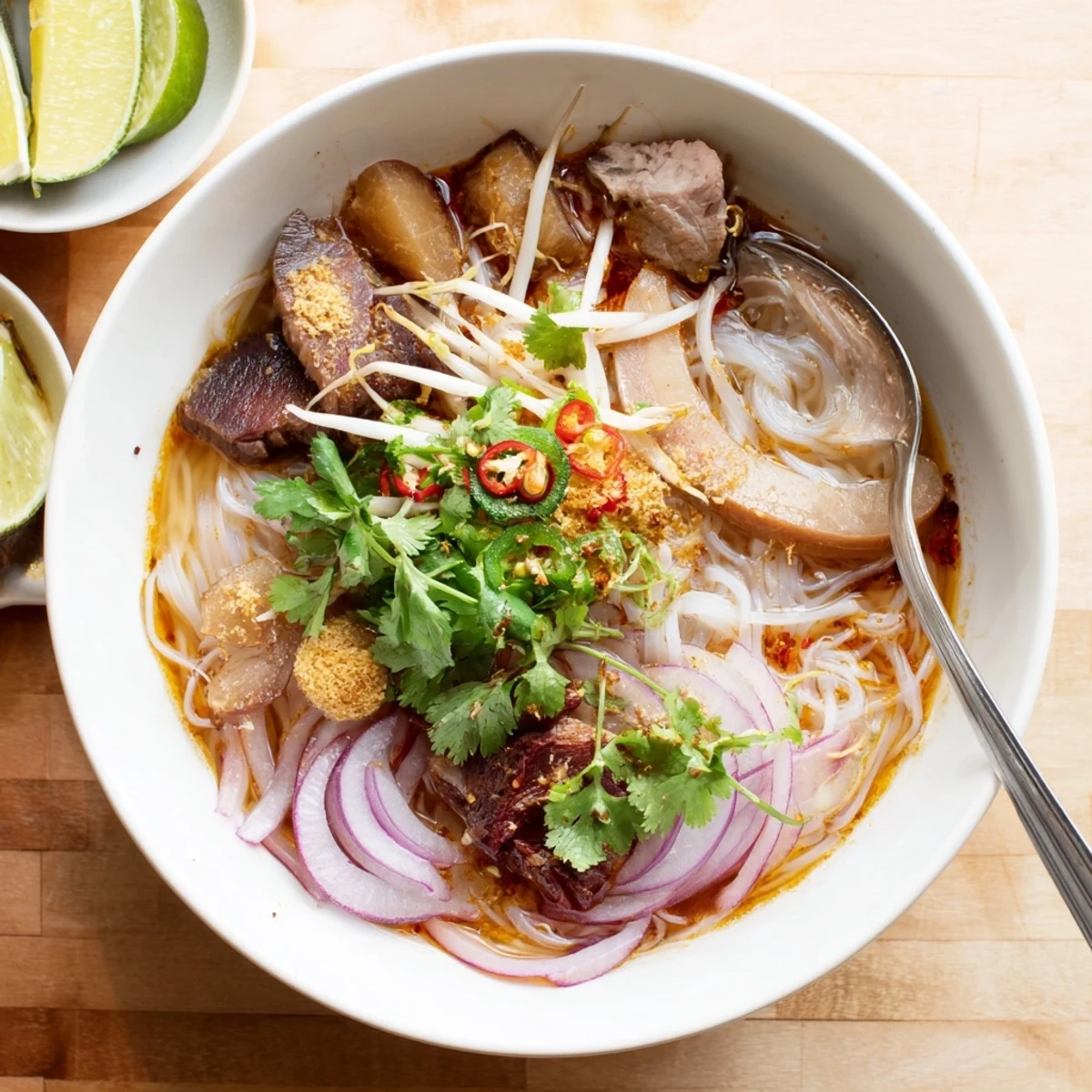
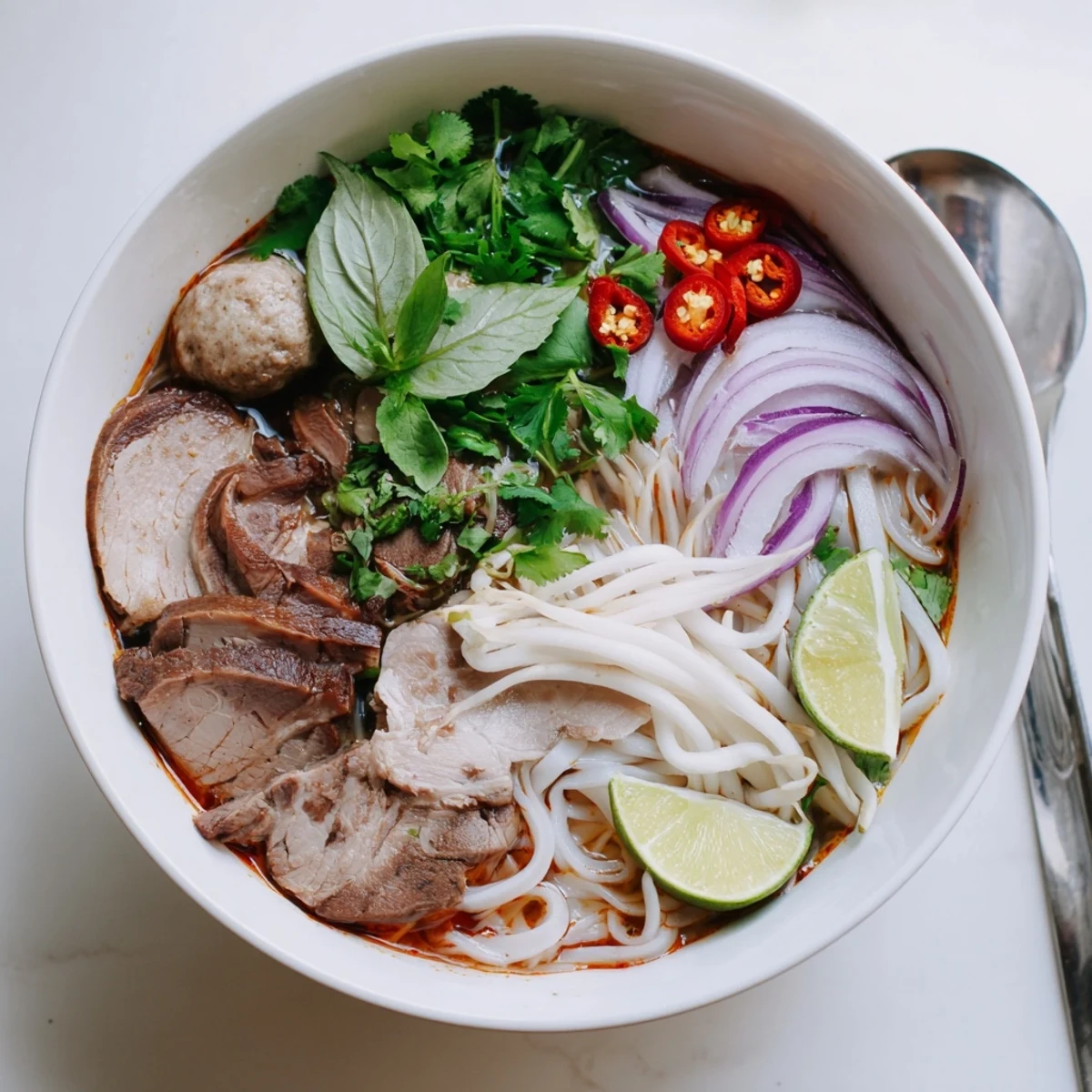
A perfectly assembled bowl creates a visual language before you even pick up your spoon. The ruby red oil swirling into amber broth, the pink of the beef, the bright white noodles, the rainbow of herbs on top. I arrange the garnishes in little piles so guests can customize their bowls, watching as they tuck in banana blossoms and squeeze lime wedges with the ritual precision of people who understand this is more than lunch.
Make It Your Own
Traditional recipes are beautiful starting points, but the best bowls reflect your own taste memories and pantry realities. Maybe that means extra scallions because you love their bite, or skipping blood cubes because they are not your thing, or adding more chili oil because you secretly believe everything tastes better with fire.
- Keep some broth unseasoned so sensitive eaters can control their salt intake
- Prep all garnishes ahead and store them in separate containers
- The broth actually improves after sitting in the refrigerator for a day
 Pin it
 There is something profoundly satisfying about serving a soup that carries centuries of history in every bowl, tastes like home to people I have never met, and reminds me why I fell in love with cooking in the first place.
Recipe FAQ
- → What makes Bun Bo Hue different from pho?
-
The broth features a spicy kick from chili oil and gets its signature red color from annatto seeds. It uses thicker round rice noodles and includes pork hock and sometimes blood cubes, unlike the beef-focused pho.
- → Is shrimp paste essential for authentic flavor?
-
Yes, mam ruoc provides the distinctive umami depth that defines this central Vietnamese dish. While strong-smelling when raw, it mellows beautifully during cooking and creates the complex flavor profile.
- → Can I make this less spicy?
-
Simply reduce or omit the chili flakes in the aromatic oil. Serve chili oil on the side so diners can control their preferred heat level.
- → What type of noodles work best?
-
Traditional thick round rice noodles called bun bo Hue are ideal. Look for them at Asian markets. Thick udon-style rice noodles can substitute if necessary.
- → How long does the broth need to simmer?
-
Plan for at least 2 hours of gentle simmering to tenderize the pork hock and beef shank while developing deep flavor. Longer simmering up to 3 hours creates even richer results.