
 Pin it
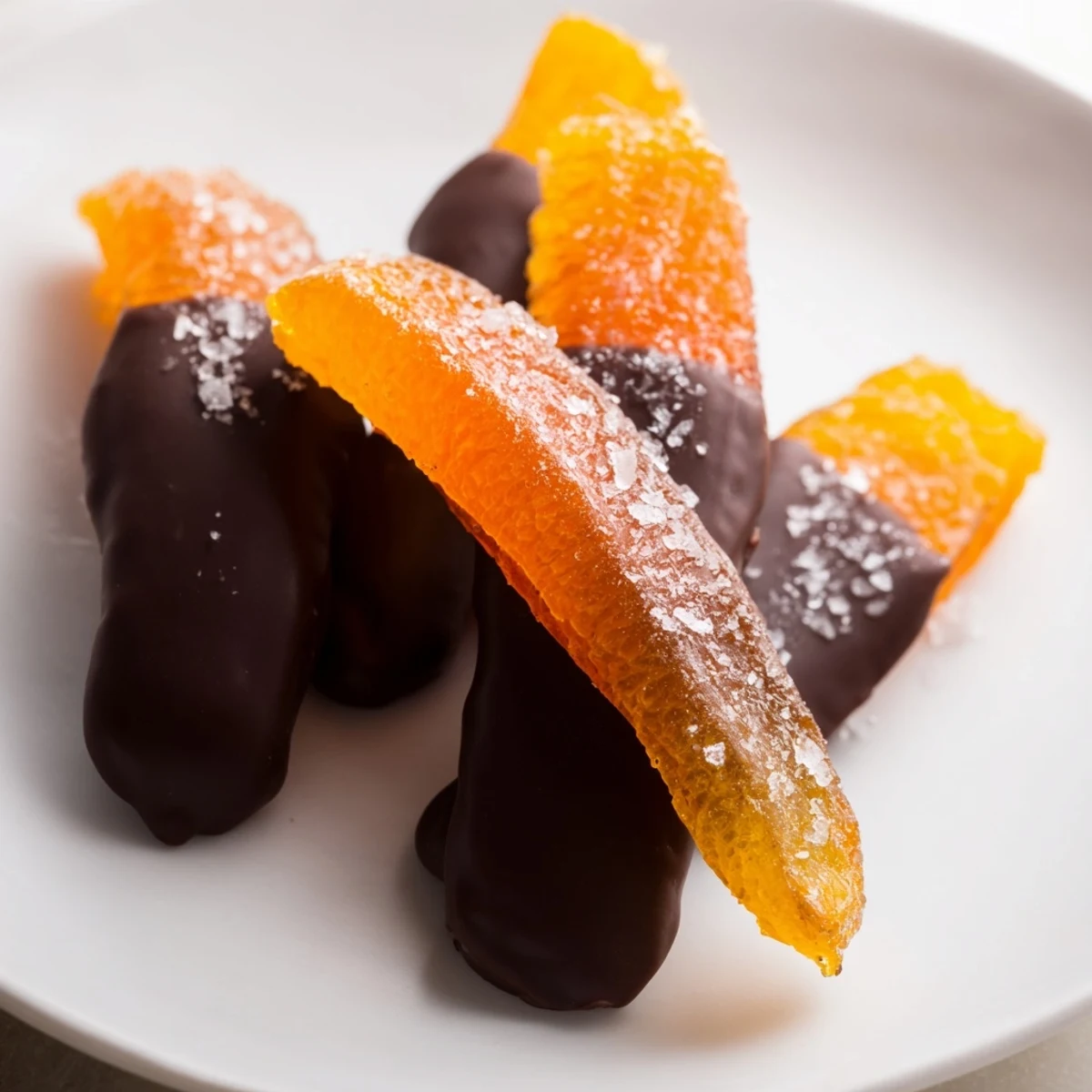
 These chocolate covered orange peels transform simple citrus into an elegant confection. Fresh orange peels are blanched to remove bitterness, then slowly simmered in sugar syrup until translucent and tender.
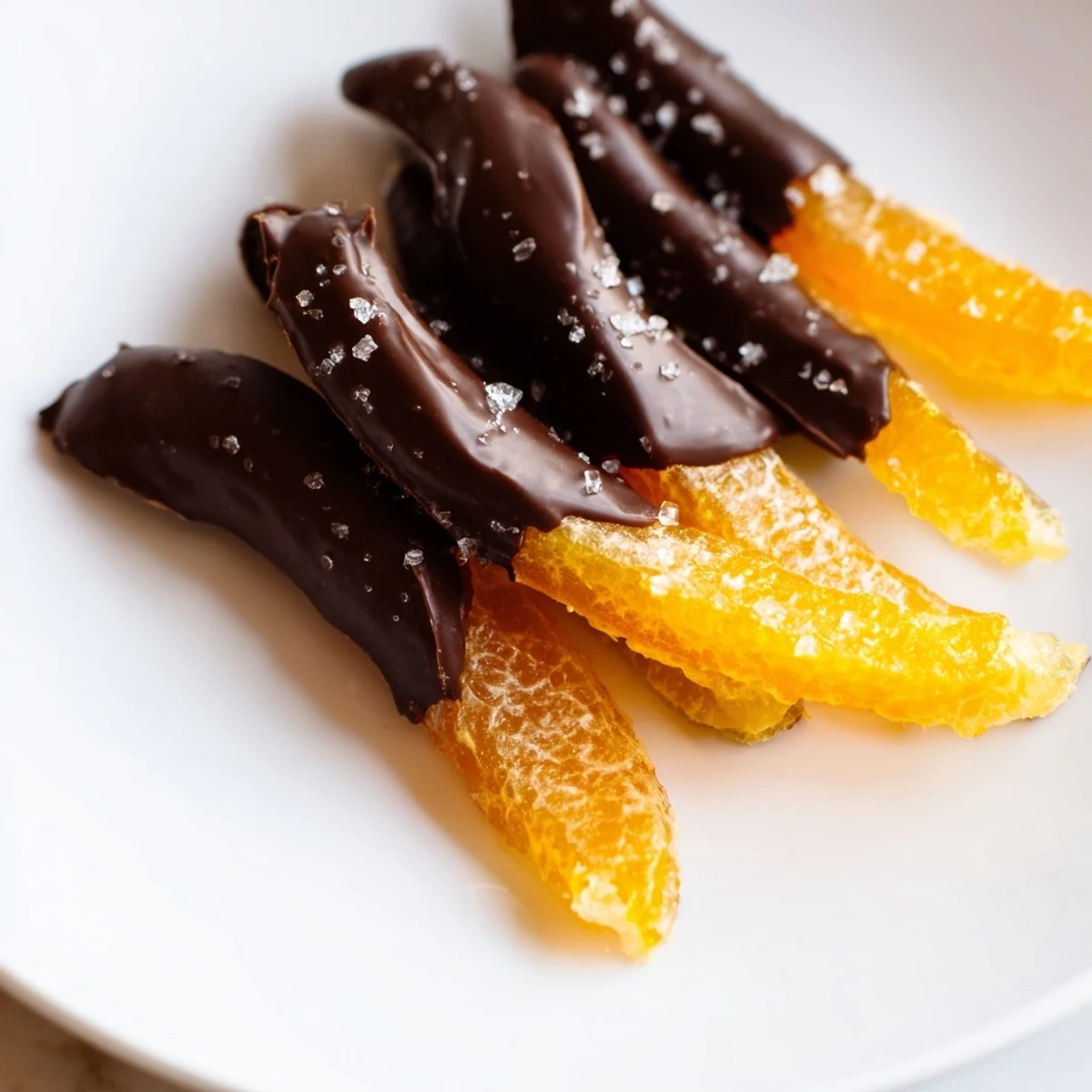
Once dried, each candied strip is dipped halfway into melted dark chocolate and finished with a touch of flaky sea salt. The result is a beautiful balance of bright citrus flavor and rich, smooth chocolate.
Perfect for holiday gifting, afternoon snacking, or as a homemade alternative to store-bought candies. They store well for up to two weeks in an airtight container.
The smell of oranges and melting chocolate together is one of those things that stops you in your tracks. I learned that on a rainy Sunday afternoon when I had a bag of oranges going soft and a half eaten bar of dark chocolate sitting on the counter. What started as a desperate attempt to not waste food turned into the most addictive little treat I have ever pulled out of my kitchen.
I brought a tin of these to my neighbors holiday party last December and they disappeared faster than the cheese plate. Three people asked for the recipe before the night was over, which honestly made me a little smug.
Ingredients
- 3 large oranges: Navel or Valencia work beautifully, and the thicker the peel the better your strips will hold up during candying.
- 1 cup (200 g) granulated sugar: Plain white sugar keeps the syrup clear so the peels turn that gorgeous translucent amber.
- 1 cup (240 ml) water: Just enough to dissolve the sugar and create a bath for the peels to simmer in.
- 200 g high quality dark chocolate (at least 60% cocoa): Do not skimp here because the chocolate is half the experience and cheap chocolate will taste waxy against the bright citrus.
- 1 tsp flaky sea salt (optional): A tiny sprinkle of salt on top makes everything taste more alive and balances the sweetness perfectly.
Instructions
- Prep the oranges:
- Wash the oranges thoroughly under warm water, then score each peel from top to bottom in quarters. Gently peel them away, keeping as much of the white pith attached as you can because it holds the shape together during cooking.
- Cut into strips:
- Slice the peels into thin strips about half a centimeter wide. Try to keep them somewhat uniform so they all finish candying at the same time.
- Blanch the bitterness away:
- Put the strips in a saucepan, cover with cold water, bring to a boil for two minutes, then drain. Repeat this two more times because those three rounds of blanching are what transforms harsh bitterness into something mellow and sweet.
- Make the syrup:
- Combine the sugar and water in your saucepan and bring it to a gentle simmer, stirring until every last grain of sugar dissolves. The liquid should look completely clear before you move on.
- Candy the peels:
- Add the blanched peels to the simmering syrup and let them bob there gently for about forty minutes, stirring occasionally. You will know they are ready when they look slightly translucent and the kitchen smells like a candy shop.
- Let them dry:
- Fish the peels out with tongs and lay them on a wire rack set over parchment paper. Give them at least an hour to dry and get tacky because wet peels will make the chocolate seize.
- Melt the chocolate:
- Set a heatproof bowl over gently simmering water and stir the chocolate until it is completely smooth and glossy. You can use the microwave in short bursts if you prefer but the double boiler gives you more control.
- Dip and finish:
- Dip each peel strip halfway into the chocolate, let the excess drip off, and place it on fresh parchment paper. Sprinkle with flaky salt if you are using it and then just wait about thirty minutes for the chocolate to set at room temperature.
 Pin it
 I keep finding excuses to make these now. They tucked into little cellophane bags become gifts, scattered over ice cream become a topping, and sitting in a jar on my desk become the reason I cannot stop snacking.
A Note on Chocolate Quality
The first time I made these I used a bargain chocolate bar from the back of the pantry and the coating turned dull and soft. Spending a little more on good chocolate with at least 60 percent cocoa changes the entire result from sticky to sophisticated.
Storage and Shelf Life
These keep beautifully in an airtight container at room temperature for up to two weeks, though in my house they rarely last that long. Avoid refrigerating them because condensation will dull the chocolate and make the peels sticky.
Getting Creative with Citrus
Once you master orange peels the whole citrus family opens up to you. Grapefruit peels give a more intense bitterness that pairs wonderfully with an even darker chocolate. Lemon peels are brighter and more floral, almost perfumed in a way that feels fancy.
- Mix different citrus peels together in one batch for a beautiful assorted look.
- Try rolling the freshly candied peels in extra sugar before drying for a sparkling crystallized finish.
- Always taste your chocolate and citrus combination before committing to a full batch.
 Pin it
 There is something deeply satisfying about turning leftover orange peels into something people genuinely crave. These little strips of sunshine are proof that the best recipes often come from the simplest ingredients and a little patience.
Recipe FAQ
- → How do I reduce bitterness in orange peels?
-
Blanching the peels three times in boiling water is essential for removing bitterness. Each time you boil them for two minutes and drain, you draw out more of the bitter compounds from the white pith. Don't skip this step.
- → Can I use milk chocolate instead of dark chocolate?
-
Yes, milk chocolate works well if you prefer a sweeter coating. However, dark chocolate (60% cocoa or higher) provides a beautiful contrast to the sweetness of the candied peels and creates a more balanced flavor.
- → How long do chocolate covered orange peels stay fresh?
-
Store them in an airtight container at room temperature and they will keep for up to two weeks. Avoid refrigerating them, as moisture can cause the chocolate to bloom and the peels to become sticky.
- → Do I need to temper the chocolate?
-
Tempering is optional but recommended for a glossy, professional finish and a firm snap. If you skip tempering, the chocolate will still taste delicious but may have a duller appearance and softer texture at room temperature.
- → Can I use other types of citrus?
-
Absolutely. Grapefruit, lemon, and tangerine peels all work beautifully with this same method. Each citrus variety brings its own unique flavor profile, so feel free to experiment with different combinations.
- → Why are my candied peels not turning translucent?
-
Translucent peels come from patient, gentle simmering in the sugar syrup. Make sure the syrup is at a low simmer, not a rolling boil, and give them the full 40 minutes. The sugar needs time to fully penetrate and candy the peel strips.