
 Pin it
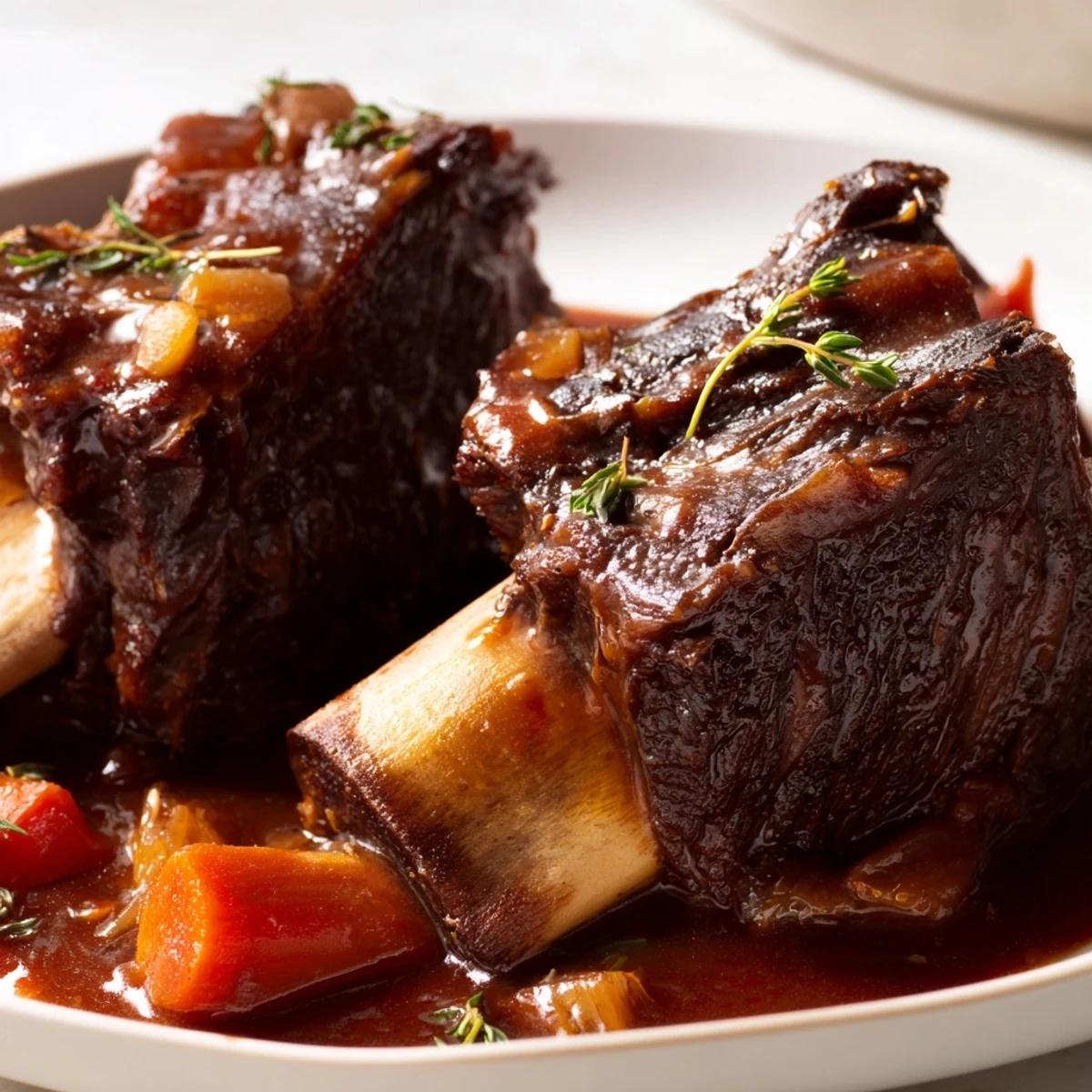
 These oven-braised beef short ribs deliver incredibly tender, fall-off-the-bone meat with a deeply rich, wine-infused sauce. Sear the ribs first for a golden crust, then build layers of flavor with onions, carrots, celery, garlic, and tomato paste.
A long, slow braise in a mixture of dry red wine and beef broth transforms tough short ribs into something truly luxurious. Fresh thyme, rosemary, and bay leaves add fragrant herbal notes throughout.
Plan ahead for about 3 hours of total time. Serve over creamy mashed potatoes or polenta to soak up every bit of that luscious sauce. Perfect for a cozy weekend dinner or entertaining guests.
The smell of red wine hitting a hot pan is, in my honest opinion, one of the most underrated kitchen aromas. It was a rainy Sunday in November when I first attempted braised short ribs, fueled by nothing but a craving and a bottle of leftover Merlot. Three hours later, the kitchen windows had fogged up and I was leaning over the stove with a fork, hardly believing the meat was actually falling off the bone. That dish turned a gloomy afternoon into something worth remembering.
I have served these ribs at dinner parties, date nights, and once on a random Tuesday when comfort food felt nonnegotiable. Every single time someone pulls a bone clean away from the meat, there is a brief silence at the table followed by an almost reverential exhale. That reaction never gets old.
Ingredients
- Bone-in beef short ribs (4 lbs): Go for meaty, well marbled pieces. The bone contributes immeasurably to the richness of the braising liquid.
- Salt and freshly ground black pepper: Season with more confidence than you think you need. The long braise will mellow everything out.
- Olive oil (2 tbsp): A good quality oil makes a noticeable difference when searing at high heat.
- Onion, carrots, celery (1 large, 2 each, 2 stalks): The classic mirepoix trio forms the sweet, savory backbone of every great braise.
- Garlic (4 cloves, minced): Fresh garlic only. The jarred version cannot compete here.
- Tomato paste (2 tbsp): This small addition deepens color and adds a subtle umami kick that ties the whole sauce together.
- Dry red wine (2 cups): Use something you would happily drink. A Cabernet Sauvignon or Merlot works beautifully.
- Beef broth (2 cups): Low sodium lets you control the salt level throughout the cooking process.
- Fresh thyme and rosemary (2 sprigs each): Fresh herbs are nonnegotiable for this recipe. Dried simply will not give you the same fragrant result.
- Bay leaves (2): Drop them in whole and remember to fish them out before serving. They do their work quietly in the background.
Instructions
- Preheat and prepare the ribs:
- Set your oven to 325 degrees Fahrenheit. Pat every surface of the short ribs thoroughly dry with paper towels, then season them generously with salt and pepper on all sides. Dry meat sears better, so do not skip this step.
- Sear until deeply golden:
- Heat olive oil in a large Dutch oven over medium high heat until it shimmers. Working in batches if needed, sear the ribs on all sides until a deep brown crust forms, roughly 3 to 4 minutes per side. Transfer them to a plate and resist the urge to clean the pot.
- Build the aromatic base:
- Drop the onion, carrots, and celery into the same pot with all those gorgeous browned bits. Sauté until the vegetables soften and begin to caramelize, about 5 minutes, then stir in the garlic for one final minute until your kitchen smells incredible.
- Add tomato paste and deglaze:
- Stir the tomato paste into the vegetables and let it cook for a minute until it darkens slightly. Pour in the red wine and use a wooden spoon to scrape up every last bit of fond from the bottom of the pot. Let the wine boil until it reduces by half, about 10 minutes.
- Return ribs and add broth:
- Nestle the short ribs back into the pot and pour in the beef broth. Tuck in the thyme, rosemary, and bay leaves. The liquid should come almost to the top of the ribs but not quite submerge them.
- Braise low and slow:
- Bring everything to a gentle simmer on the stovetop, then cover with a tight fitting lid and slide the whole pot into the oven. Braise for 2 and a half to 3 hours, checking near the end until the meat yields completely to a fork and slides off the bone.
- Finish the sauce and serve:
- Carefully remove the ribs and vegetables to a warm platter. Discard the herb sprigs and bay leaves, then use a ladle to skim off excess fat from the surface of the sauce. If you prefer a thicker consistency, simmer the sauce on the stovetop for a few minutes until it coats the back of a spoon. Spoon everything generously over the ribs and serve hot.
 Pin it
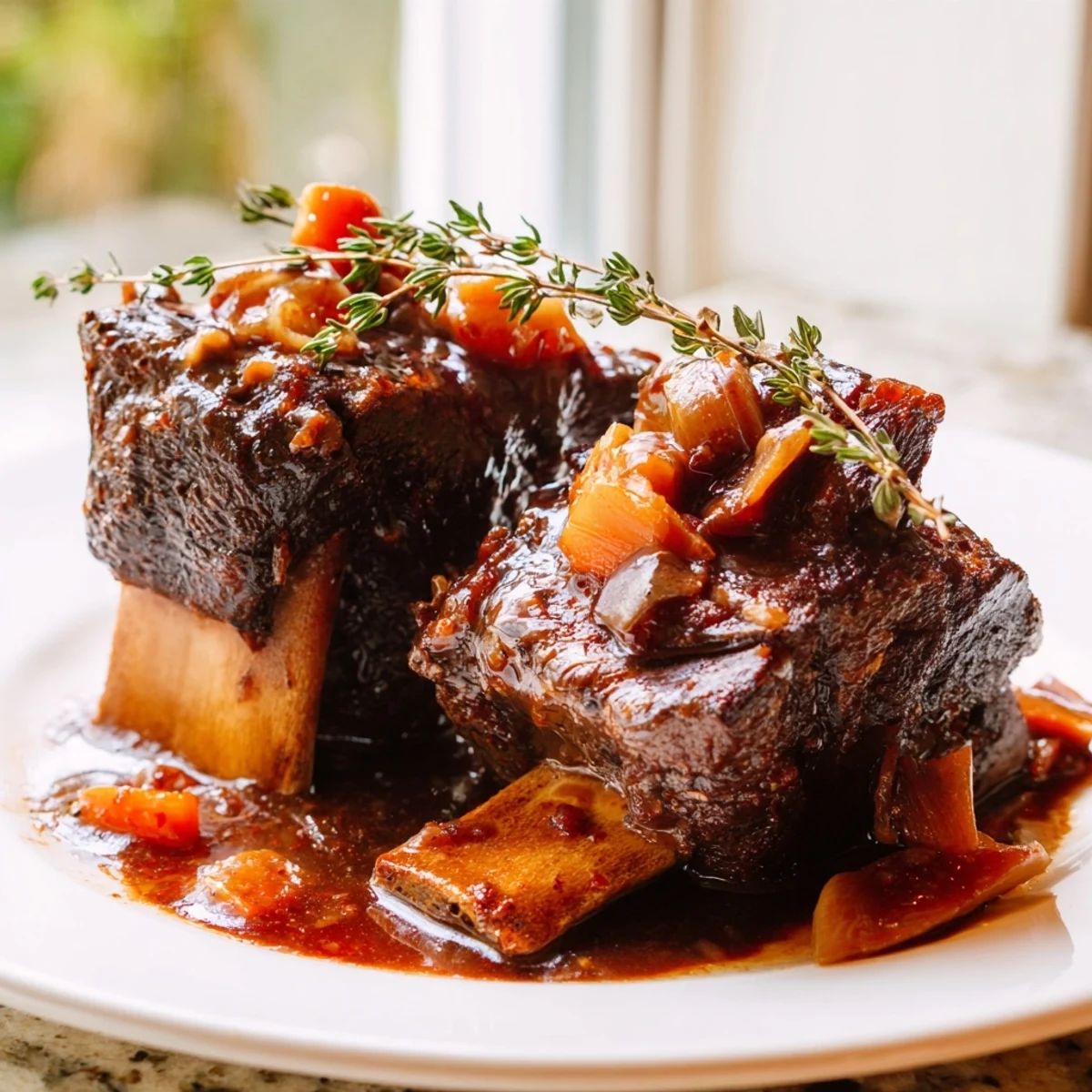
 There is something quietly powerful about a recipe that asks for patience and rewards it so completely. These ribs have a way of turning an ordinary evening into an occasion without any fuss or formality.
What to Serve Alongside
Creamy mashed potatoes are the obvious and correct choice, soaking up the braising sauce like a sponge. Polenta is a close second, especially when you stir in a bit of butter at the end. A chunk of crusty bread also does admirable work when you want something simpler.
Making It Ahead
Short ribs are one of those rare dishes that genuinely taste better the next day. Make them a full 24 hours ahead, refrigerate everything in the braising liquid, then gently reheat on the stovetop. The fat solidifies on top overnight, making it effortless to remove before reheating.
A Few Last Thoughts
Confidence at the stove comes from repetition, and braised short ribs are a forgiving place to build it. The margins are generous and the results are spectacular.
- A Dutch oven is ideal, but any heavy ovenproof pot with a tight lid will serve you well.
- Check broth and wine labels if cooking for someone with dietary restrictions, as hidden ingredients can surprise you.
- Let the finished ribs rest for five minutes before serving so the meat can settle and the juices redistribute.
 Pin it
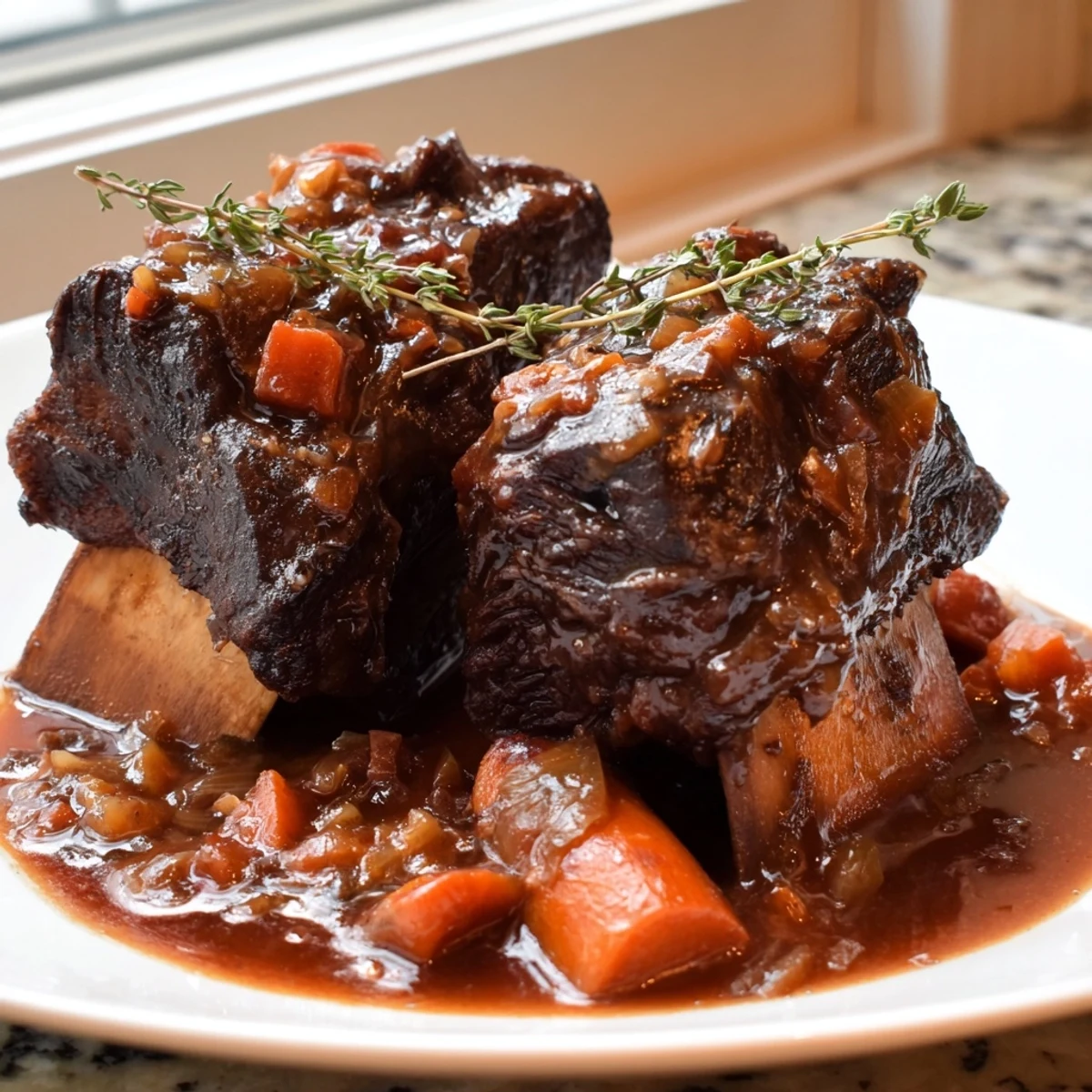
 Save this one for the evenings that matter, or honestly, for the ones that do not. Great food does not need a reason beyond wanting something warm and wonderful on your plate.
Recipe FAQ
- → What cut of beef short ribs works best for braising?
-
Bone-in beef short ribs are ideal for braising. The bone adds richness and body to the braising liquid while helping the meat retain moisture during the long cooking process. Look for well-marbled, meaty ribs about 2 to 3 inches thick.
- → Can I braise short ribs ahead of time?
-
Yes, braised short ribs actually taste better when made a day in advance. The flavors deepen and meld as the dish rests overnight. Refrigerate the ribs in their sauce and reheat gently on the stovetop over low heat until warmed through.
- → What type of red wine should I use for braising?
-
Choose a dry red wine like Cabernet Sauvignon, Merlot, or Pinot Noir. Avoid cooking wines, which contain added salt and preservatives. Use a wine you would enjoy drinking, as its flavor concentrates significantly during the braising process.
- → Why do the short ribs need to be seared before braising?
-
Searing creates a caramelized crust through the Maillard reaction, which adds deep, savory flavor to the meat and the finished sauce. This step also renders some of the surface fat. Do not skip this step, as it is essential for building a rich, complex flavor base.
- → How do I know when braised short ribs are done?
-
The ribs are ready when the meat is fork-tender and easily pulls away from the bone. This typically takes 2.5 to 3 hours at 325°F. If the meat still feels firm or requires effort to pierce with a fork, continue braising and check every 30 minutes.
- → What should I serve with braised beef short ribs?
-
Creamy mashed potatoes, polenta, or crusty bread are classic pairings that soak up the rich braising sauce. Roasted root vegetables, sautéed greens, or a simple green salad also complement the dish beautifully and balance its hearty richness.
- → Can I make this in a slow cooker instead of the oven?
-
Yes, after searing the ribs and sautéing the vegetables on the stovetop, transfer everything to a slow cooker. Cook on low for 6 to 8 hours or on high for 4 to 5 hours until the meat is fork-tender. Reduce the sauce on the stovetop afterward if a thicker consistency is desired.