
 Pin it
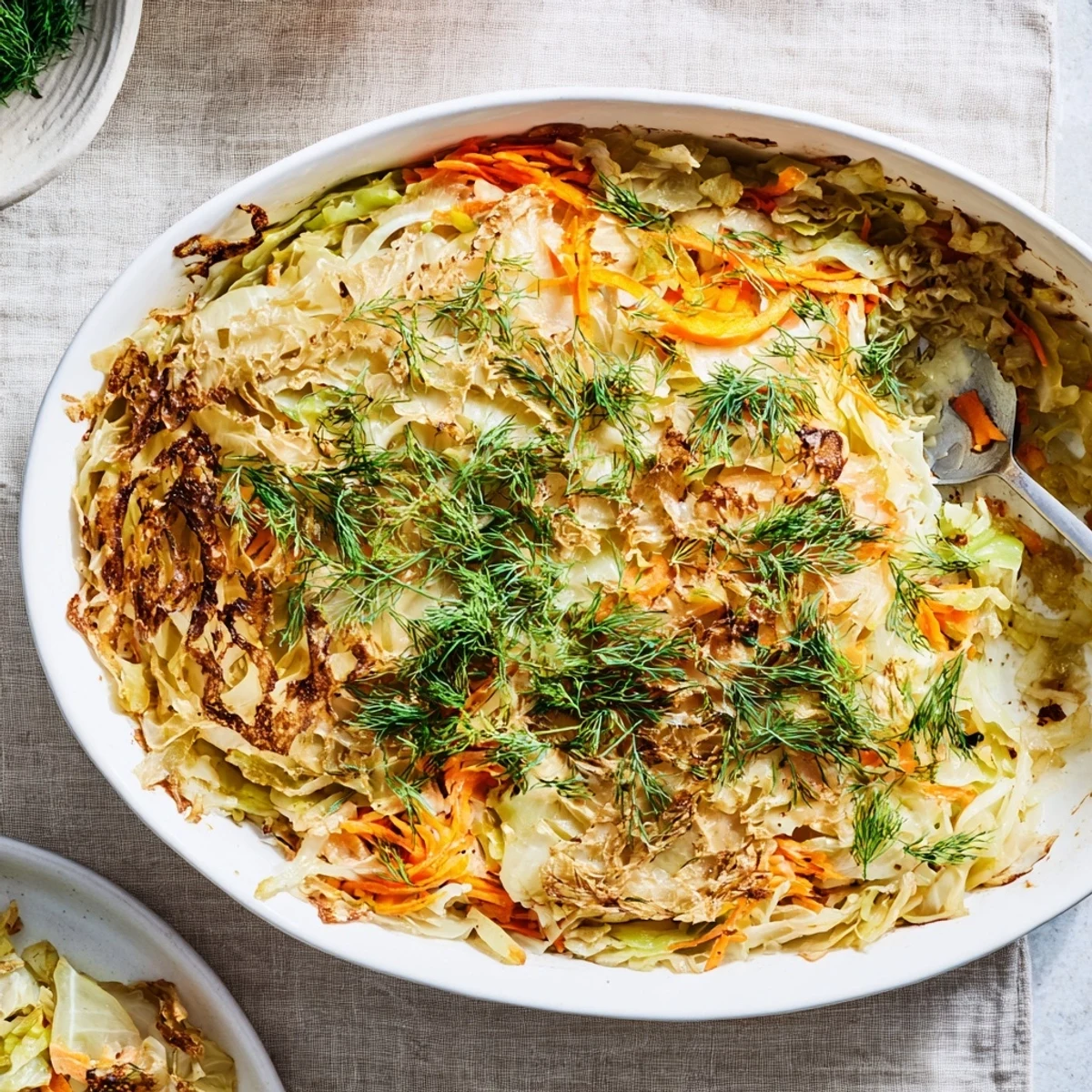
 This comforting dish brings together humble ingredients transformed through slow roasting. Thinly sliced cabbage is lightly wilted with onions, garlic, and carrots, then layered with tangy sauerkraut sweetened with grated apple. Aromatic caraway seeds and smoked paprika provide depth, while fresh dill adds brightness.
The long, slow cooking process at 325°F allows flavors to meld beautifully, creating tender vegetables with concentrated taste. Finishing uncovered at higher temperature yields lightly browned, caramelized edges while excess liquid evaporates.
Optional sour cream and cheese toppings add creaminess, though it's equally satisfying without. Serve with crusty bread or boiled potatoes for a complete meal. The dish improves overnight, making it excellent for meal prep.
The smell of cabbage roasting low and slow in the oven is one of those quiet kitchen miracles that sneaks up on you. One minute your kitchen smells like nothing, and two hours later it is wrapped in this deep, savory warmth that pulls people to the doorway asking what is cooking. I threw this casserole together one rainy Sunday when the fridge held nothing but half a cabbage and a forgotten jar of sauerkraut, and it has been a cold weather staple ever since.
My neighbor Katrin stopped by the first time I made this, carrying a bottle of Riesling and complaining about the chill in her bones. We sat at the kitchen table with steaming bowls and that same bottle, and she told me her grandmother in Bavaria made something nearly identical every autumn. She asked for the recipe before she left, which is honestly the highest compliment I know.
Ingredients
- 1 medium green cabbage, about 2 lb, cored and sliced into thin strips: The heart of the dish, and slicing it thin ensures it wilts down into silky layers rather than staying stubborn and crunchy.
- 2 medium onions, thinly sliced: They melt into sweetness during the long roast and balance the sharp bite of the sauerkraut beautifully.
- 2 cloves garlic, minced: Just enough to give a warm backbone without overpowering the delicate cabbage flavor.
- 2 large carrots, grated: They add subtle sweetness and a pop of color that makes the casserole look as good as it smells.
- 3 cups sauerkraut, drained and lightly rinsed: Rinsing is key here, otherwise the tang can overwhelm everything else in the dish.
- 1 apple, peeled and grated: Mixed into the sauerkraut, it softens the acidity and adds a faint fruity note that surprises people in the best way.
- 1 cup vegetable broth: Keeps everything moist during the slow roast and deglazes all those concentrated flavors from the bottom of the dish.
- 1/4 cup dry white wine, optional: If you have an open bottle, pour it in. It adds a lovely depth, but the casserole is still wonderful without it.
- 2 tbsp olive oil: Used for sautéing the base vegetables and greasing the dish.
- 1 tsp caraway seeds: The single most important spice here. They are what make this taste like it came from a grandmother kitchen somewhere in Central Europe.
- 1 tsp smoked paprika: Adds a gentle smokiness that makes the whole dish feel richer without any meat.
- 1/2 tsp ground black pepper and 1/2 tsp salt: Simple seasoning that you can adjust at the end once the flavors have concentrated.
- 2 tbsp fresh dill, chopped, plus extra for garnish: Stirred into the sauerkraut layer and scattered on top at the end, it brings a fresh brightness that cuts through the richness.
- 1/2 cup sour cream or dairy free alternative, optional: Spread over the top in the final minutes of baking for a creamy, tangy finish.
- 1/4 cup grated cheese or vegan cheese, optional: Adds a golden, bubbly crown if you are in the mood for something a little more indulgent.
Instructions
- Get the oven ready:
- Preheat your oven to 325 degrees F and rub a 3 quart casserole dish with a little olive oil so nothing sticks later.
- Build the flavor base:
- Warm the olive oil in a large skillet over medium heat and cook the onions until they turn translucent and sweet, about 5 minutes. Toss in the garlic and stir for just one more minute until you can smell it blooming in the pan.
- Wilt the cabbage:
- Add the shredded cabbage to the skillet and let it cook down, stirring every so often, until it softens and shrinks noticeably, roughly 5 to 7 minutes. Fold in the grated carrots, salt, pepper, caraway seeds, and smoked paprika so everything is evenly coated.
- Prep the sauerkraut layer:
- In a mixing bowl, combine the drained sauerkraut with the grated apple and chopped dill, tossing gently so the apple distributes evenly throughout.
- Layer it all together:
- Spoon half of the cabbage mixture into the bottom of your prepared dish and spread it out evenly. Top with half the sauerkraut mixture, then repeat with the remaining cabbage and sauerkraut to build two complete layers.
- Add the liquids:
- Pour the vegetable broth and white wine, if using, slowly and evenly over the entire casserole so the moisture seeps down through both layers.
- Slow roast covered:
- Cover the dish tightly with aluminum foil or a lid and slide it into the oven for 1 hour, letting everything steam and meld together in that gentle heat.
- Finish uncovered:
- Remove the foil, turn the oven up to 375 degrees F, and bake for another 30 to 45 minutes until the top turns lightly golden and most of the liquid has cooked away.
- Add the creamy topping:
- If you are using sour cream and cheese, spread the sour cream evenly over the top and sprinkle on the cheese during the last 10 minutes of baking so it melts into a bubbling finish.
- Rest and garnish:
- Let the casserole sit for 10 minutes before serving so the layers set up nicely, then scatter fresh dill over the top and bring it to the table.
 Pin it
 There is something about carrying a bubbling casserole dish to the table that makes a Thursday dinner feel like a proper occasion. This dish has a way of turning an ordinary evening into the kind of meal where everyone goes back for seconds and nobody looks at their phone.
Making It Your Own
I have tossed sautéed mushrooms between the layers when I wanted something meatier, and once folded in a cup of cooked brown lentils that needed using up. Both versions were devoured without complaint. The casserole is forgiving by nature, so if you have extras hanging around the kitchen, chances are they will find a happy home in here.
What to Serve Alongside
Crusty bread is the obvious choice, perfect for soaking up the concentrated juices at the bottom of the dish. Boiled potatoes work just as well if you want something more filling, and a glass of dry Riesling alongside turns a humble cabbage casserole into something genuinely celebratory.
Storing and Reheating
This casserole stores beautifully in the fridge for up to four days, and honestly I think it tastes even better on day two when the flavors have had time to settle into each other. Reheat it covered in a 350 degree F oven until warmed through, or microwave individual portions if you cannot wait.
- Let it cool completely before covering and refrigerating so condensation does not make the top soggy.
- It freezes well for up to two months if you wrap the dish tightly in foil and slide it into a freezer bag.
- Always taste for salt before serving leftovers, because the sauerkraut continues to release flavor as it sits.
 Pin it
 Some recipes earn their place in your rotation through sheer convenience, and others through the way they make your kitchen smell like home. This one does both, and it will quietly become the dish you reach for every time the weather turns cold.
Recipe FAQ
- → Can I make this dish ahead of time?
-
Absolutely. This tastes even better the next day as flavors continue to develop. Prepare up to 2 days in advance, refrigerate, and reheat at 350°F for 20-25 minutes until hot throughout.
- → Is slow roasting necessary, or can I cook it faster?
-
Slow roasting is key for tender cabbage and melded flavors. Faster cooking at higher temperatures will result in crunchier vegetables and less depth. The 2-hour method creates the comforting, melt-in-your-mouth texture that makes this dish special.
- → What can I use instead of sauerkraut?
-
Fresh cabbage fermented in brine works well. Alternatively, use coleslaw mix with a splash of vinegar and caraway seeds, though the distinctive tang will be milder. Korean kimchi provides a spicier variation.
- → Can I freeze leftovers?
-
Yes, freeze for up to 3 months in airtight containers. Thaw overnight in refrigerator and reheat covered at 350°F for 25-30 minutes. Texture softens slightly after freezing but remains delicious.
- → What proteins pair well with this casserole?
-
While substantial on its own, it pairs beautifully with smoked sausage, bratwurst, or pork chops for meat-eaters. For vegetarian protein, serve alongside lentils, white beans, or top with toasted nuts and seeds.
- → How do I know when it's done?
-
The cabbage should be completely tender when pierced with a fork, and most liquid should be absorbed or evaporated. The top should show light golden-brown spots. If still soupy after 45 minutes uncovered, return to oven for additional time.