
 Pin it
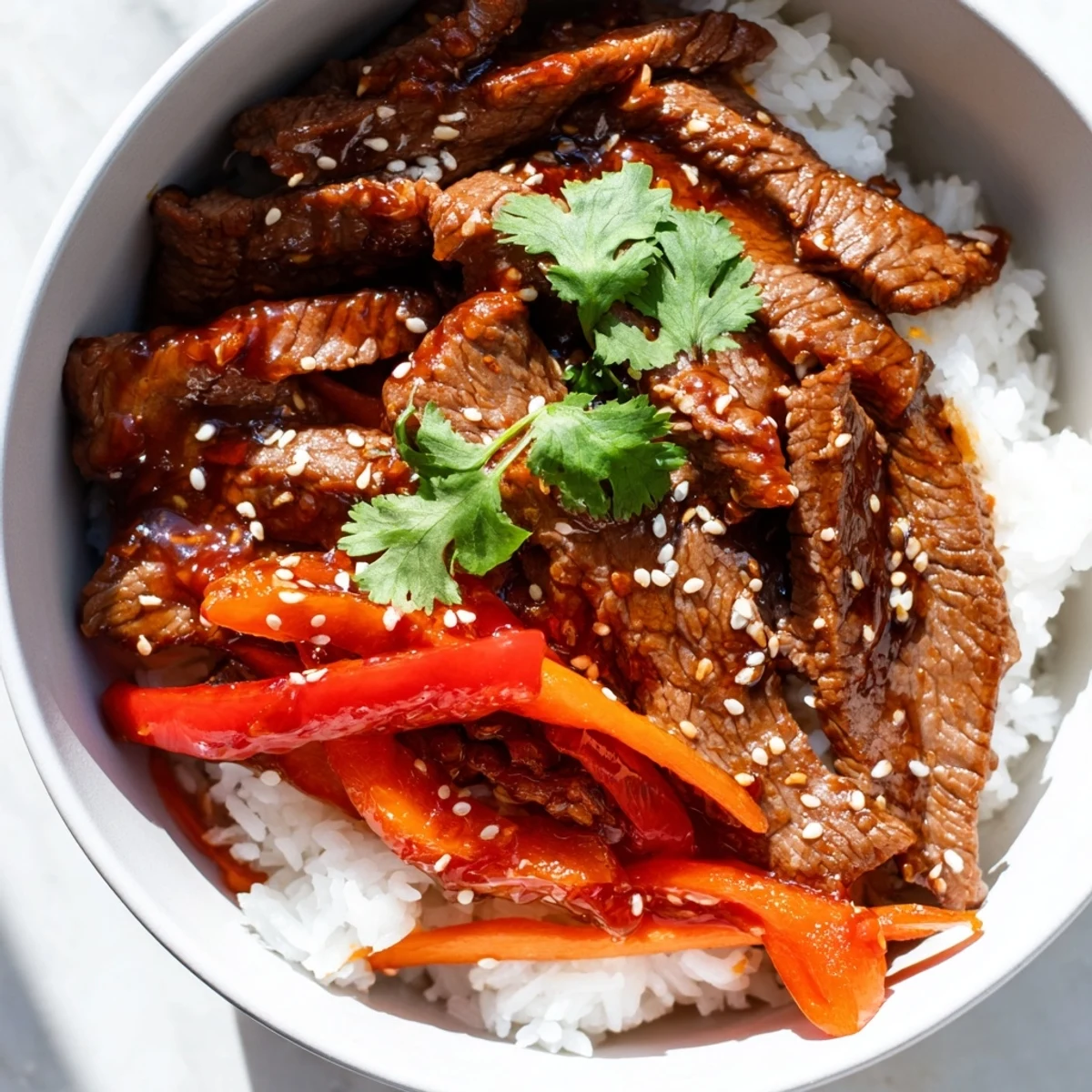
 This dish showcases thinly sliced beef marinated and seared to perfection, combined with a bold spicy sauce made from soy, sriracha, and fragrant garlic and ginger. Crisp vegetables like bell pepper, snap peas, and carrot add texture and freshness. Served over steaming jasmine or basmati rice, it delivers a balanced harmony of heat, umami, and crunch – ideal for quick weeknight dining with an Asian-inspired flair.
There's something about the sizzle of beef hitting a hot wok that makes everything feel urgent and alive. I discovered this spicy beef bowl on a random Tuesday when I had leftover flank steak, a craving for heat, and absolutely no desire to order takeout again. The sauce came together in minutes, and by the time the kitchen filled with that ginger-garlic aroma, I knew I'd stumbled onto something worth repeating.
I made this for my roommate who claimed he couldn't handle spicy food, then watched him go back for thirds and casually mention it tasted like the bowls from that place he loved downtown. Turns out the secret was giving him rice to temper the heat and knowing exactly when to remove the beef so it stayed tender. That bowl became our Thursday night ritual.
Ingredients
- Flank steak or sirloin, thinly sliced (500 g): Slice against the grain to ensure tenderness, and don't overthink it—a sharp knife and steady hand matter more than perfect thickness.
- Cornstarch (1 tbsp): This creates a silky coating that helps the beef brown beautifully and cling to the sauce.
- Soy sauce (3 tbsp plus 1 tbsp): Use good quality soy sauce; the difference between mediocre and excellent is noticeable when it's this central to flavor.
- Sriracha or chili-garlic sauce (2 tbsp): Sriracha gives consistent heat, but chili-garlic paste adds deeper, less predictable spice—choose based on your mood.
- Hoisin sauce (1 tbsp): The hidden sweetness that balances fire and salt, making each bite complex instead of just hot.
- Brown sugar (1 tbsp): Amplifies umami and creates a glossy finish on the sauce that clings to rice and vegetables.
- Rice vinegar (2 tsp): A splash of acid cuts through richness and keeps everything tasting fresh rather than heavy.
- Fresh garlic and ginger: Mince garlic fine and grate ginger so they distribute evenly—chunky pieces turn bitter when seared.
- Sesame oil (1 tbsp): Add this at the end of sauce prep; heat destroys its delicate nuttiness.
- Bell pepper, snap peas, carrot, spring onions: Cut everything thinly and uniformly so they cook in exactly the same time and stay crisp.
- Jasmine or basmati rice (2 cups cooked): Rice is your insurance policy against too much heat; the starch soothes and creates balance.
- Toasted sesame seeds: Toast them yourself in a dry pan for thirty seconds—the difference is worth it.
Instructions
- Marinate the beef quietly:
- Toss the sliced beef with 1 tbsp soy sauce and cornstarch in a bowl and let it sit for 10 minutes. This isn't wasted time—the cornstarch is coating each piece and the soy is penetrating gently, setting you up for success.
- Build your sauce:
- Whisk together soy sauce, sriracha, hoisin, brown sugar, rice vinegar, minced garlic, grated ginger, and sesame oil in a small bowl. The mixture should smell aggressive and smell right—ginger forward, with heat lurking underneath.
- Sear the beef hard and fast:
- Heat your wok or skillet until it's smoking, add a splash of oil, then sear the beef in batches for 2–3 minutes until the edges brown but the center stays tender. Don't crowd the pan or you'll steam instead of sear.
- Stir-fry the vegetables:
- Add a little more oil to the same pan and cook the bell pepper, snap peas, and carrot for 2–3 minutes until they're still crisp but warm through. The vegetables should still have snap when you bite them.
- Bring it together:
- Return the beef to the pan, pour the sauce over everything, and toss constantly for 1–2 minutes over high heat until the sauce coats every piece and everything glistens. This is when you taste and decide if you need more heat.
- Serve with intention:
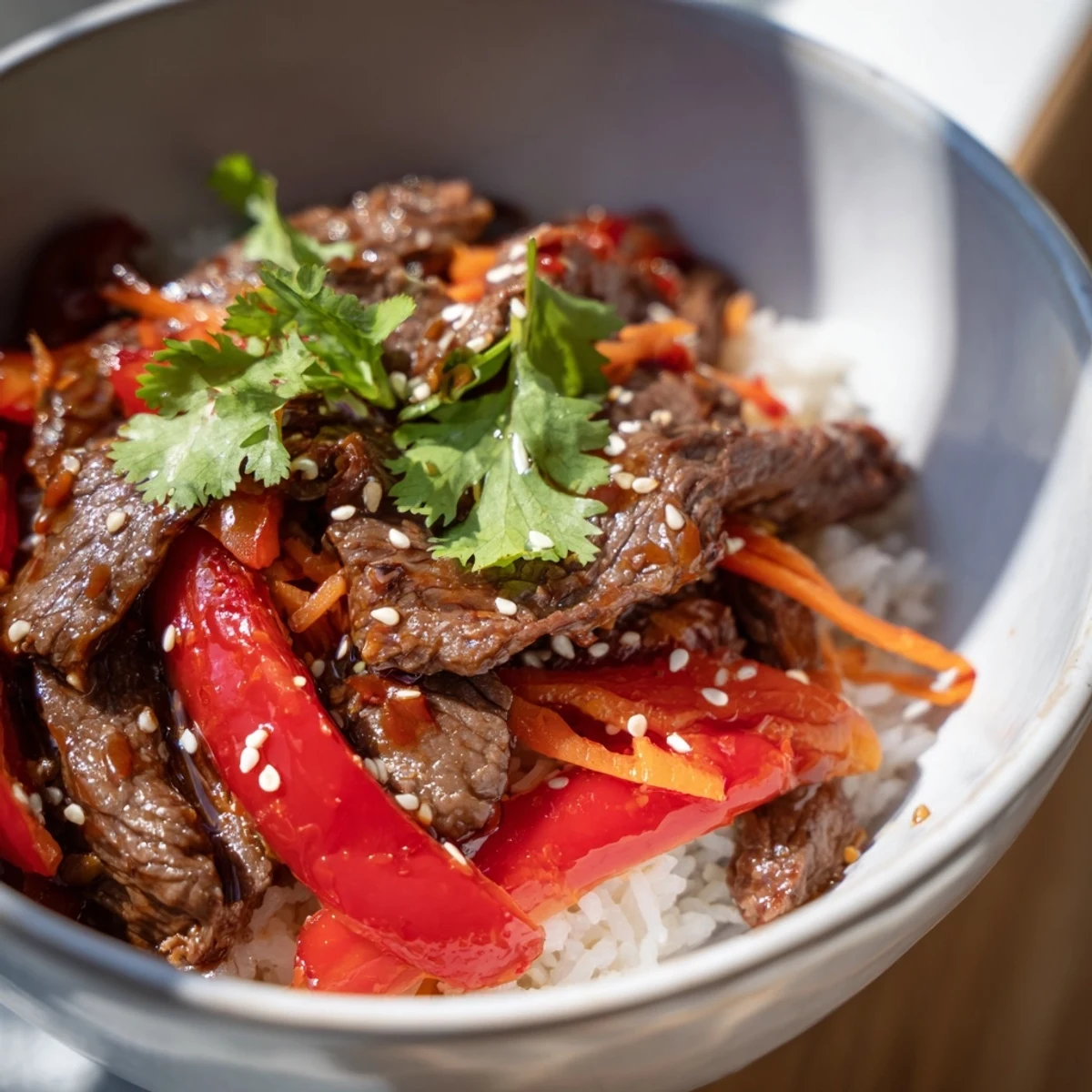
- Spoon the spicy beef and vegetables over warm rice, scatter sesame seeds and spring onions on top, and add cilantro if you want freshness to cut through the richness.
 Pin it
 Once, I made this bowl for a dinner party and someone asked if I'd ordered it from that expensive Asian place downtown. The compliment meant everything, but the real moment was watching people slow down between bites—not because it was too hot, but because the flavors were balanced enough to think about, even in the middle of conversation.
The Heat Balance That Matters
Spice isn't just fire; it's a conversation between ingredients. Sriracha brings sharp heat, ginger adds warmth and complexity, garlic adds depth, and the brown sugar-hoisin combination keeps everything from feeling one-dimensional. If you go too heavy on sriracha and forget the other layers, you'll have a painful bowl. If you balance them, you'll have a bowl people want to finish.
Why This Works for Weeknights
The 40-minute total time is real because everything happens in a skillet or wok and you're reusing the same pan. There's no resting, no complicated plating, no techniques that require special training. What makes it feel special is speed and heat, not complexity. You can taste how much respect the beef gets in those two minutes of searing, and that matters more than spending an hour on prep.
Variations That Expand the Idea
The foundation is solid enough to improvise. Some nights I use broccoli and mushrooms instead of snap peas. Other times I add a handful of cashews for crunch or swap sriracha for sambal oelek if I want darker, deeper heat. The sauce formula stays the same, but the vegetables can follow whatever's in your crisper drawer.
- Try pouring the sauce over the rice and vegetables without the beef for a vegetarian version—it's equally satisfying.
- Add fresh lime juice at the end if you want brightness, or a drizzle of chili oil if you want smoke.
- Make double the sauce and freeze it in an ice cube tray so you always have spicy sauce ready for emergency dinners.
 Pin it
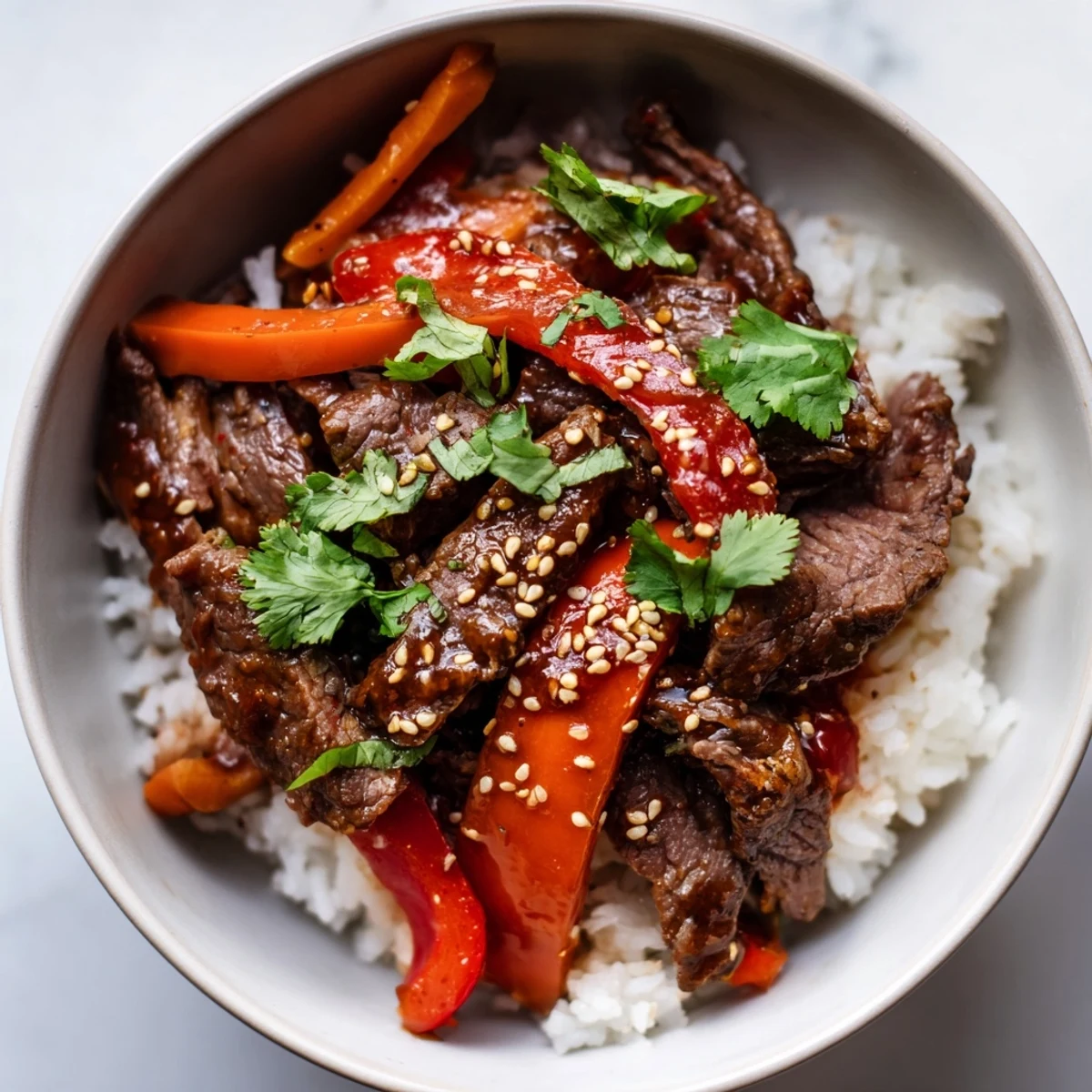
 This bowl lives in my rotation because it tastes like more work than it actually is. The truth is just high heat, a few ingredients that know each other well, and rice to make it all land softly.
Recipe FAQ
- → What cut of beef works best for this dish?
-
Flank steak or sirloin thinly sliced are ideal as they cook quickly and remain tender when seared over high heat.
- → How spicy is the sauce, and can it be adjusted?
-
The sauce is moderately spicy due to sriracha and chili-garlic sauce, but you can reduce or increase heat by adjusting these ingredients or adding fresh chili.
- → Can the vegetables be substituted?
-
Yes, broccoli, bok choy, or mushrooms can be used instead of the bell pepper, snap peas, and carrots to suit your preference.
- → Is this dish suitable for gluten-free diets?
-
To make it gluten-free, replace soy sauce with tamari and ensure all other sauces used are certified gluten-free.
- → What cooking tools are recommended?
-
A large skillet or wok is best for high-heat searing and stir-frying. Mixing bowls and a sharp knife are useful for preparation.
- → How can I add extra flavor or texture?
-
Sprinkle toasted sesame seeds or fresh cilantro over the finished dish, or add a pinch of chili flakes for more punch.