
 Pin it
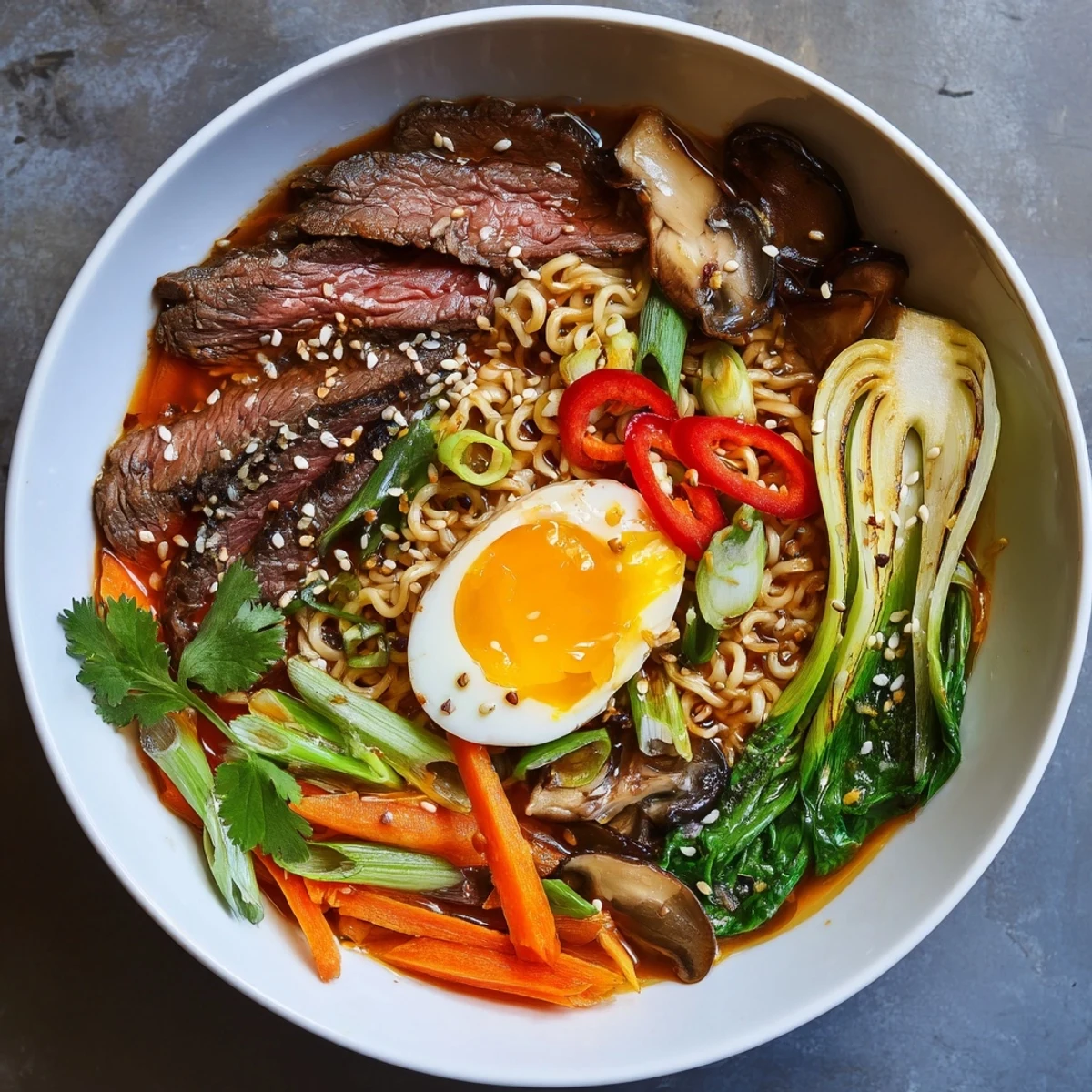
 This dish features tender flank steak marinated and quickly seared, combined with chewy ramen noodles in a rich, spicy broth infused with chili paste, miso, and mirin. Soft boiled eggs provide a creamy contrast, while fresh vegetables like shiitake mushrooms, bok choy, and carrots add texture and freshness. Aromatics such as garlic, ginger, and spring onions deepen the flavor, finished with toasted sesame and fresh coriander for a fragrant finish. Ideal for a warming, flavorful meal.
The first time I made spicy beef ramen at home, I was chasing that deep satisfaction of a bowl from a bustling Tokyo ramen shop—the kind where you can see the steam rising and hear the sizzle of beef hitting the pan. My kitchen suddenly felt smaller, warmer, and full of promise. That first slurp, with the heat building on my tongue and the soft egg yolk breaking into the broth, made me understand why people queue for hours for a good bowl. It became my answer to almost every question that winter: tired? Make ramen. Friends coming over? Ramen. Bad day? Spicy beef ramen.
I remember my partner asking for a second bowl before finishing the first, which says everything. The table got quiet for a moment—the only sound was the scrape of chopsticks and spoons—and I knew I'd created something worth repeating.
Ingredients
- Flank steak (300 g): Thin slices cook fast and stay tender; the marinade with cornstarch keeps them silky even with high heat.
- Soy sauce: Use low-sodium in the broth so you can control the final salt level—the beef marinade adds richness too.
- Gochujang or sambal oelek (2 tbsp): This is where the spice backbone lives; it's fruity and complex, not just hot.
- Miso paste (1 tbsp): A small amount adds umami depth without making the broth taste obviously fermented.
- Fresh ramen noodles: If you can find them, they cook in 2–3 minutes and have a silky texture that dried noodles can't match.
- Soft-boiled eggs (4): The creamy yolk is essential—it's not just a topping, it's a sauce in itself.
- Shiitake mushrooms: Their earthiness rounds out the spice and adds a subtle chewiness to the broth.
- Bok choy and carrots: These stay crisp-tender and add sweetness that balances heat beautifully.
Instructions
- Marinate the beef:
- Toss your thin slices with soy sauce, sesame oil, cornstarch, and pepper. The cornstarch creates a silky coating that clings during the sear. Ten minutes is enough—this isn't about deep marinade, it's about readiness.
- Soft-boil the eggs:
- Boil water, gently lower in room-temperature eggs, set a timer for exactly 6 minutes. The ice bath stops the cooking instantly; without it, you'll lose that jammy yolk. Peel them under cool running water for clean edges.
- Build the broth base:
- Heat oil, soften onions, then bloom garlic and ginger for a minute—this releases their aromatics into the fat. The smell alone tells you you're on the right path.
- Deepen the flavor:
- Stir in chili paste and mushrooms first, cook them for 2 minutes so they lose their raw edge and their umami mingles with the oil. Then add soy, miso, mirin, and vinegar—this quartet creates a balanced heat, sweetness, and tang.
- Simmer low and slow:
- Once broth and water go in, keep the heat gentle; a rolling boil will muddy the flavors. You're building something refined here, not rushed.
- Sear the beef:
- High heat, quick moves, just 1–2 minutes per batch—you want a golden crust and a rosy inside. The beef will finish cooking gently in the hot broth later.
- Add vegetables with timing:
- Carrots and bok choy go in 3–4 minutes before serving so they're tender but still bright. They'll continue cooking from the residual heat once plated.
- Cook noodles separately:
- Fresh or dried, follow the package time but taste a minute early—you want tender with a tiny bite, not mushy. Drain them well so they don't dilute the broth.
- Assemble with intention:
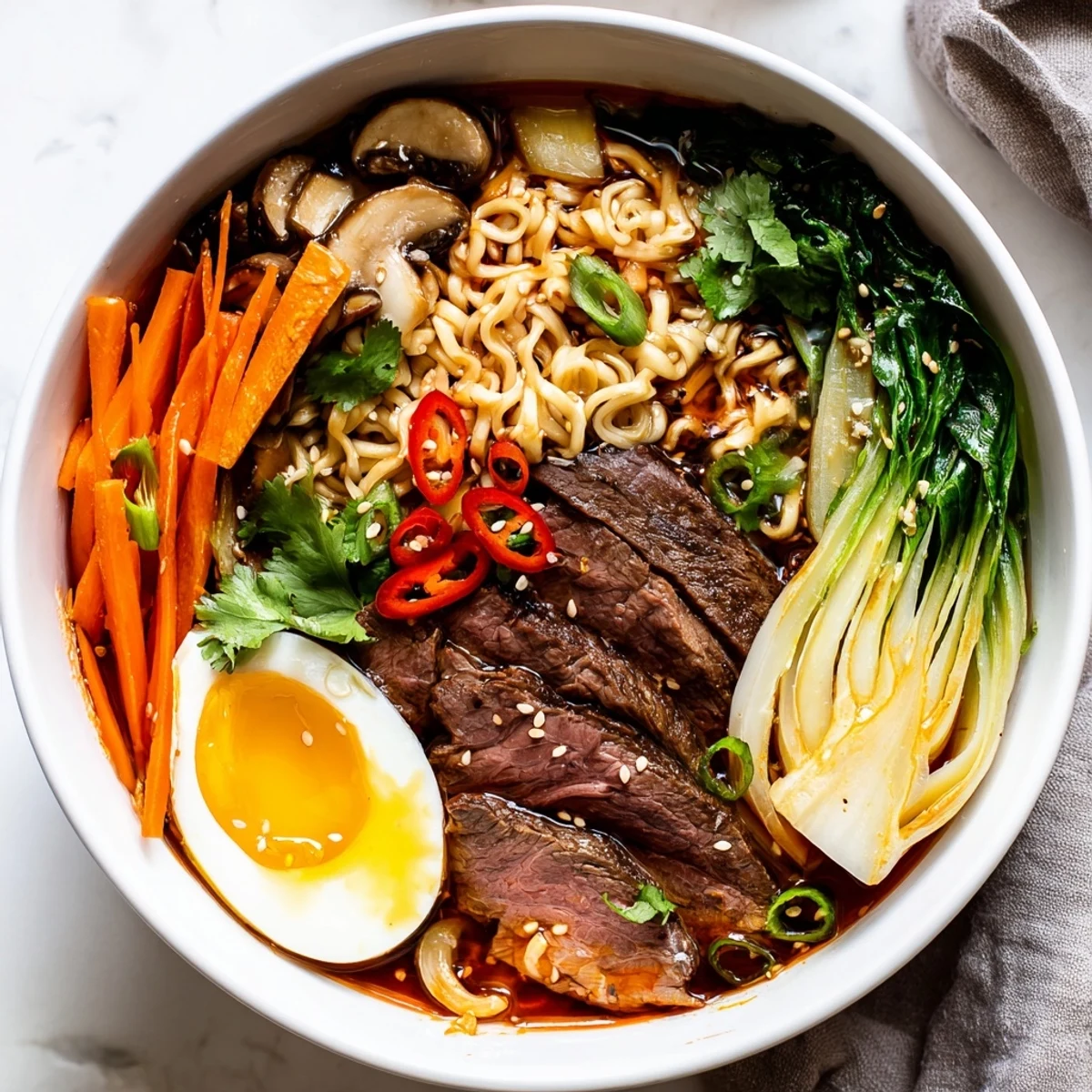
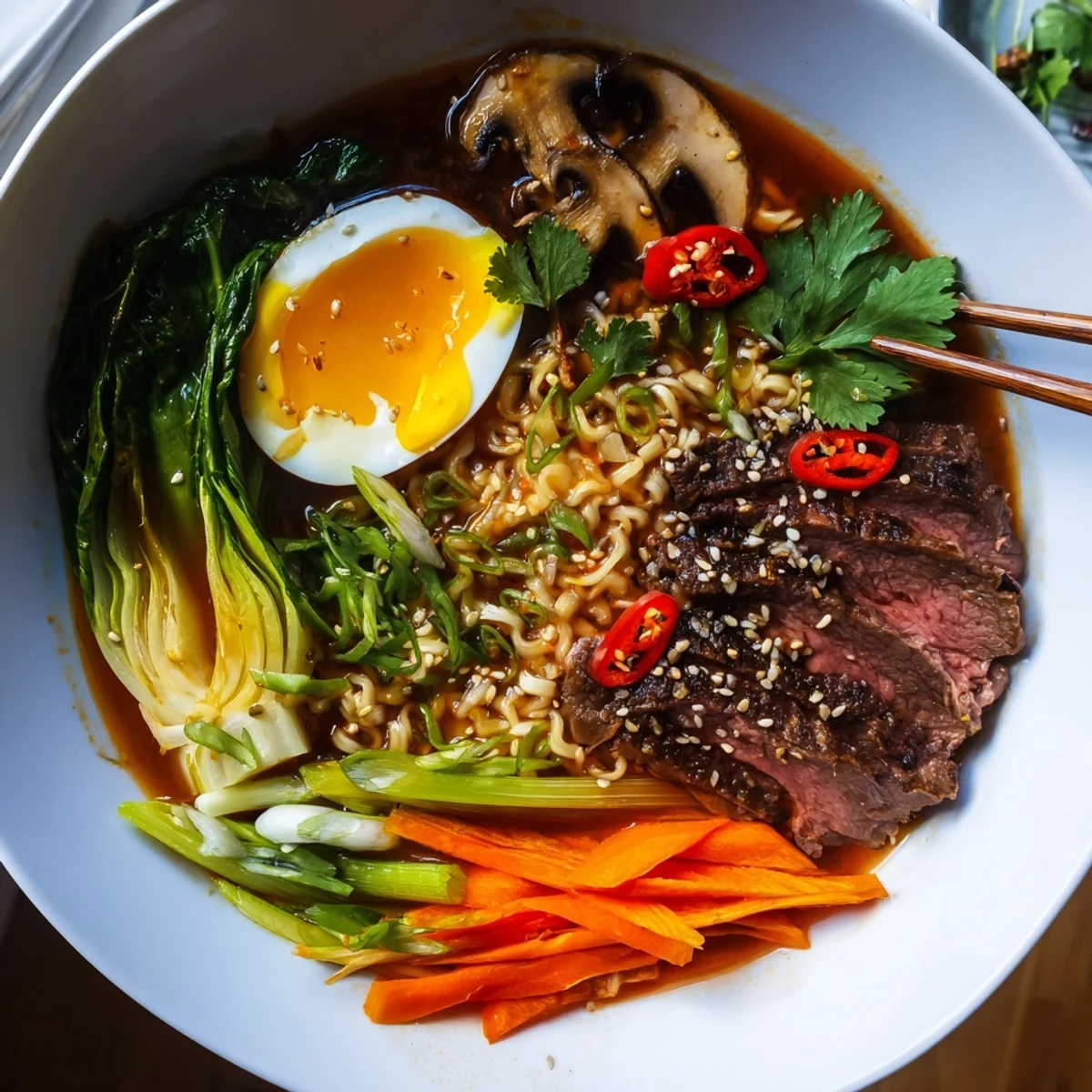
- Noodles in the bowl first, hot broth and vegetables over them, then beef, the halved egg, spring onions, sesame, chili, and a scatter of fresh coriander. Each layer should be visible.
 Pin it
 There's something about feeding people a bowl of ramen that feels almost ceremonial. You're handing them warmth and spice and comfort all at once, and they're trusting you to get it right.
The Art of Balancing Heat
Spicy doesn't mean painful—it means layered and purposeful. The chili paste in this broth has fruity notes underneath the fire, and the miso, soy, and vinegar keep it from becoming one-note. I learned this by adding too much chili to an early batch and having to dilute the whole pot with more broth; now I taste as I go and trust that the residual heat builds as the bowl sits in front of you. The soft-boiled egg yolk, when you break it into the broth, cools things down just enough while adding richness that makes the spice feel sophisticated rather than aggressive.
Why This Recipe Works for Crowds
Ramen is a dish that everyone can personalize at the table without you having to remake it. The broth is your base, but then each person decides: more chili for some, a squeeze of lime for others, maybe an extra egg for the person who came hungry. You're not trapped in the kitchen adjusting portions—you're sitting with people, watching them customize and enjoy. The beef cooks fast, the noodles cook fast, and once the broth is simmering, you're mostly just waiting and tasting, which is the best part of cooking.
Make It Your Own
The beauty of this recipe is its flexibility without losing its soul. Swap the beef for thin chicken breast if you prefer lighter, or go vegetarian with extra mushrooms and a touch of miso—the broth is what matters. Some mornings I'll add a splash of chili oil at the end for deeper, roasted heat rather than sharp spice. Other times, a squeeze of fresh lime juice right before eating brightens everything up and cuts through the richness. The base recipe is strong enough to support these changes without asking permission.
- If you can't find fresh ramen noodles, dried ones work—just don't overcook them since they're more fragile than they look.
- Make the broth up to two days ahead and reheat gently; the flavors actually deepen as it sits.
- Eggs can be soft-boiled up to 8 hours ahead and stored in the fridge, then warmed gently in the broth just before serving.
 Pin it
 This ramen became my winter signature—the one thing I make when I want to feel like I'm taking care of people properly. It's bold enough to feel special, simple enough to feel doable, and warm enough to chase away whatever the day brought.