
 Pin it
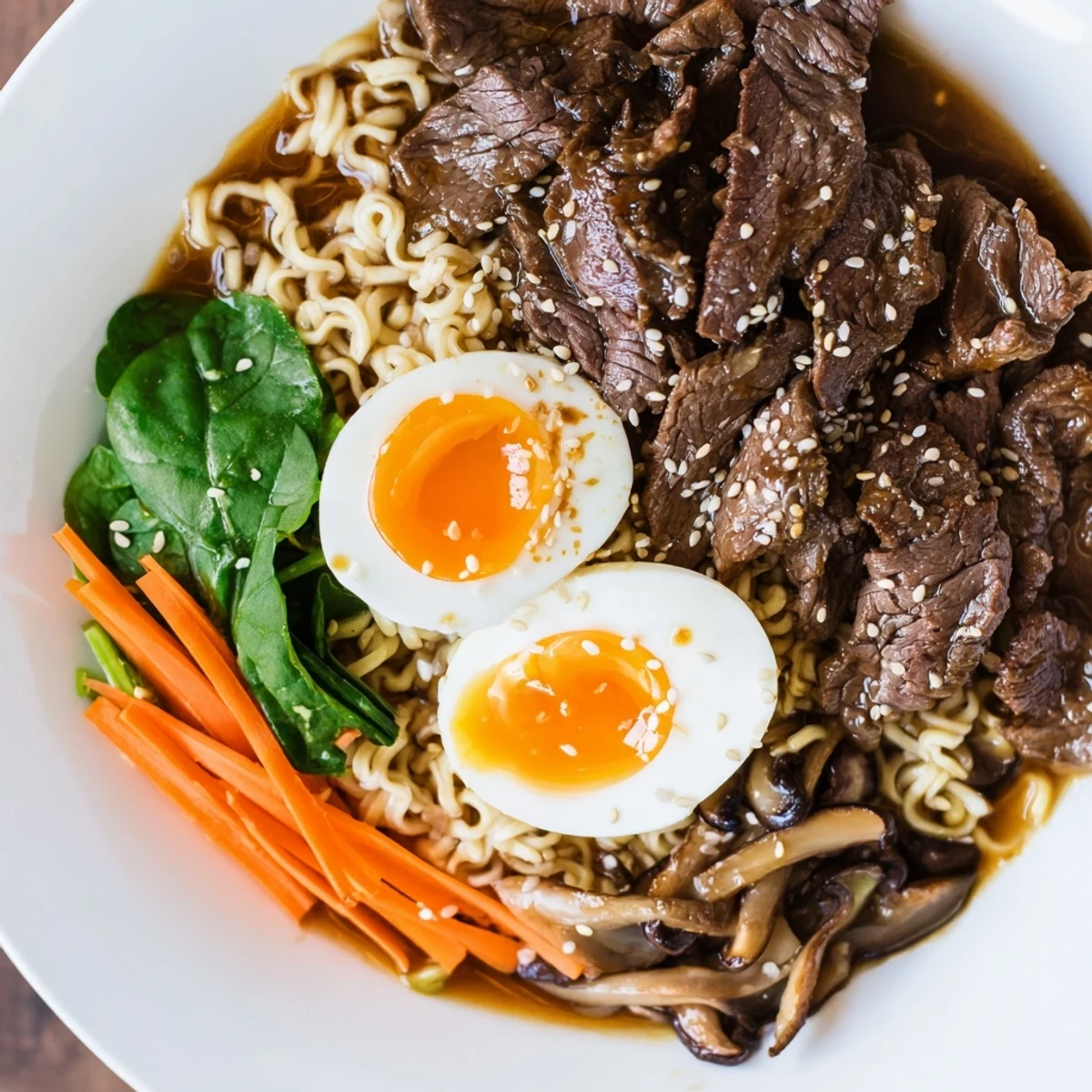
 This dish blends tender beef slices marinated in savory soy and mirin with a fragrant broth featuring garlic, ginger, chili paste, and miso. Soft-boiled eggs lend richness, while vegetables and fresh toppings bring texture and color. Quick noodle cooking and searing beef create a layered, satisfying bowl with a gentle heat balanced by umami depth. Ideal for a hearty, comforting meal inspired by Japanese flavors.
The steam still hits my face when I lift the lid, carrying that unmistakable perfume of ginger, garlic, and something deeper, richer. My first attempt at homemade ramen came from a desperate craving on a rainy Tuesday, armed with nothing but a vague memory of flavors and a stubborn determination to recreate that bowl I'd had years ago in a tiny shop hidden down a Tokyo alley. Now, this recipe has become my go-to for nights when comfort food needs to feel like a warm embrace rather than just dinner.
Last winter, my roommate caught me hovering over the pot at midnight, spoon in hand, insisting I was just tasting for seasoning. She laughed, grabbed a bowl, and we sat on the kitchen floor eating steaming noodles while snow piled up outside the window. Those impromptu ramen nights have become something of a tradition in our house now.
Ingredients
- Beef sirloin or flank steak: Thinly slicing against the grain makes every bite tender, and the quick marinade ensures the meat stays juicy even in hot broth
- Chili paste: Gochujang brings this fermented depth that plain hot sauce can't match, but sambal oelek works beautifully if you prefer brighter heat
- Miso paste: White miso adds subtle sweetness that rounds out the spice, creating that restaurant quality umami backbone
- Soft boiled eggs: Six and a half minutes gives you that just set white impossibly creamy center that makes ramen feel like a treat
- Fresh ramen noodles: They soak up the broth better than dried ones, but don't stress, good quality dry noodles still make a fantastic bowl
Instructions
- Marinate the beef:
- Toss the sliced beef with soy sauce, mirin, sesame oil, and cornstarch until evenly coated. Let it sit while you prep everything else, those 15 minutes make all the difference in texture.
- Perfect those eggs:
- Bring water to a gentle boil, not rolling, and lower the eggs in carefully with a slotted spoon. Six and a half minutes, then straight into an ice bath to stop the cooking.
- Build your broth base:
- Sauté garlic and ginger until fragrant, about a minute, then stir in your chili paste and miso. The kitchen should smell amazing right about now.
- Simmer to perfection:
- Pour in the stock, soy sauce, vinegar, and brown sugar, then let it bubble gently for 10 minutes. Taste and adjust the heat level before adding the vegetables.
- Cook the noodles:
- Follow the package timing exactly, then drain immediately. Overcooked noodles are the saddest thing in a bowl of ramen.
- Sear the beef:
- Get your pan ripping hot and cook the marinated beef in batches, just 2 to 3 minutes per batch. You want a nice sear, not gray steamed meat.
- Finish with vegetables:
- Drop mushrooms and carrots into the broth and cook until just tender, still with a bit of bite. They'll keep cooking in the hot bowl anyway.
- Assemble your masterpiece:
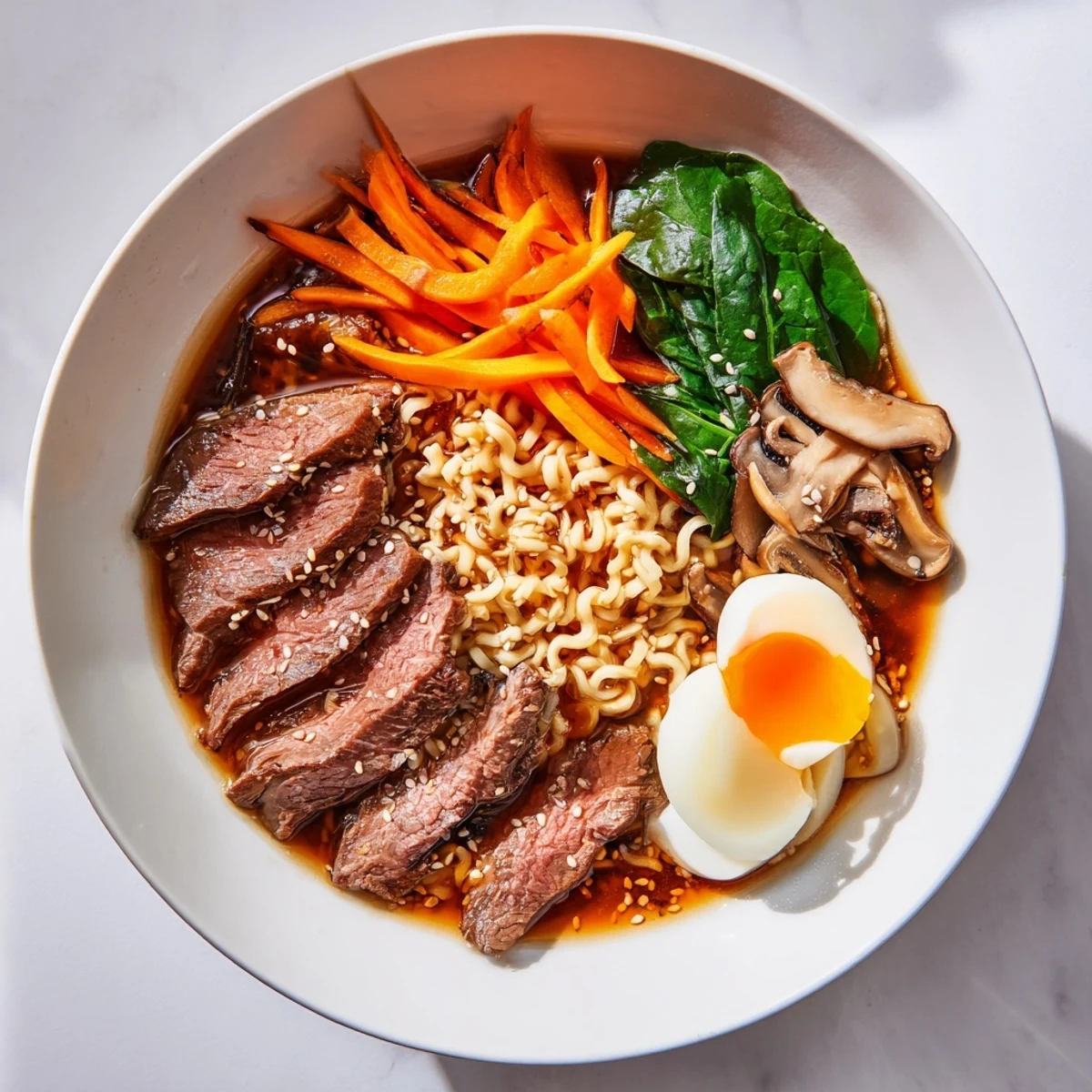
- Noodles first, then ladle over that gorgeous broth, arrange the beef and eggs on top like you're plating for a food magazine. Finish with spinach, spring onions, chili, sesame seeds, and maybe nori if you're feeling fancy.
 Pin it
 My dad called me from the grocery store once, ramen obsessed after trying this recipe, asking which chili paste to buy. We spent twenty minutes debating gochujang brands while he wandered the international aisle, and I realized this recipe had become something we shared, a little bridge between our kitchens hundreds of miles apart.
Building a Better Broth
After months of experimentation, I discovered that blooming the aromatics and pastes together before adding any liquid is the secret to restaurant depth. Also, a splash of rice vinegar at the end brightens everything without tasting acidic, it just makes all the flavors pop.
The Art of Assembly
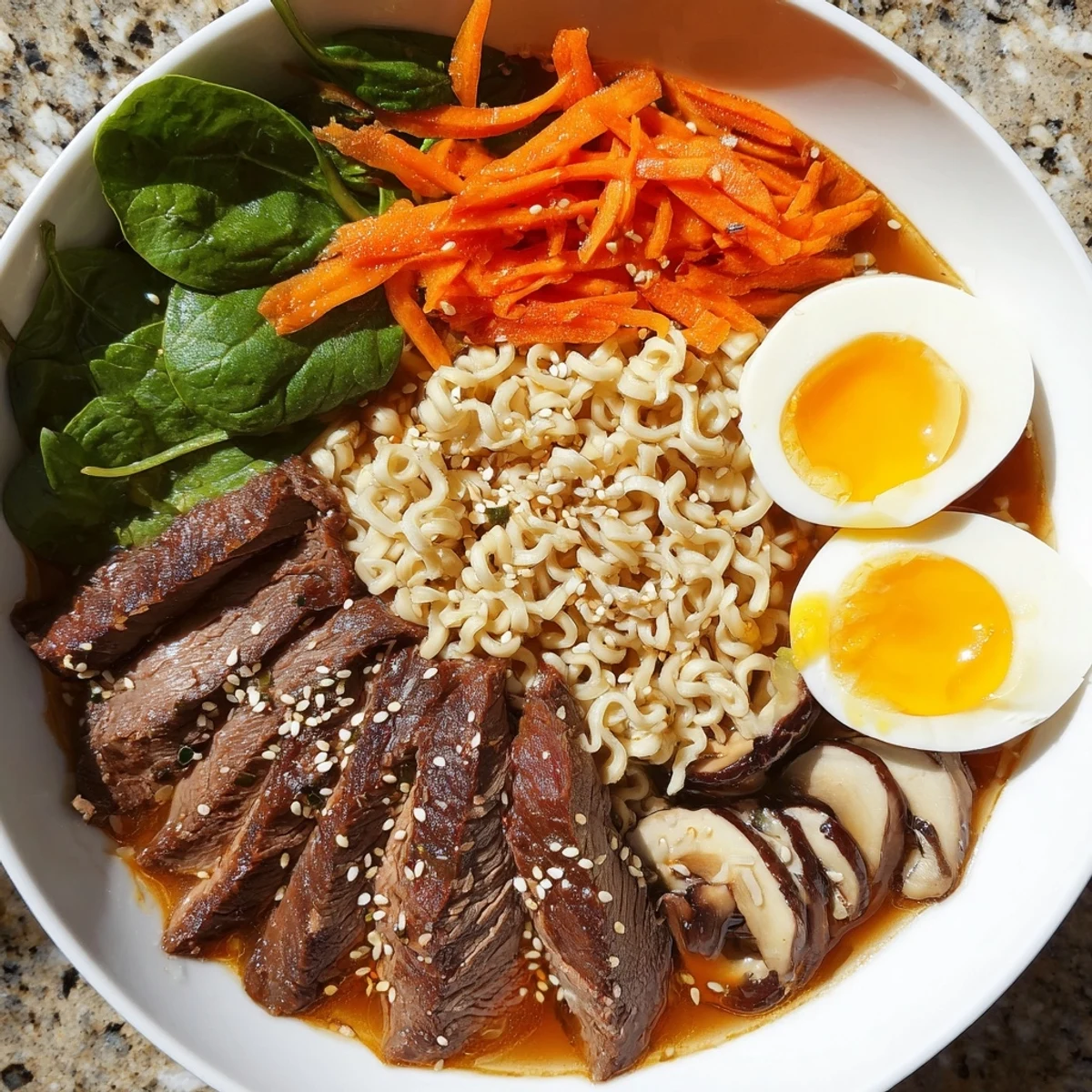
How you arrange the toppings matters more than you'd think, clustering the beef and eggs where they'll be most visible and scattering the lighter garnishes to catch the steam. A beautiful bowl somehow tastes better, science be damned.
Make It Your Own
Some nights I add a handful of corn kernels for sweetness, or switch up the protein entirely. The beauty of this recipe is that once you've mastered the broth, it becomes a template for whatever you're craving or have on hand.
- Leftover rotisserie chicken shreds beautifully in place of beef
- A drizzle of chili oil right before serving creates these gorgeous red ribbons throughout the broth
- Extra nori, sesame seeds, and even a pat of butter can transform the last bowl into something completely new
 Pin it
 There's something profoundly satisfying about slurping hot noodles while steam fogs up your glasses, knowing you created this bowl of comfort from scratch. Hope this recipe finds its way into your own midnight kitchen traditions.
Recipe FAQ
- → How do I achieve a perfect soft-boiled egg?
-
Simmer eggs gently for 6½ minutes, then transfer to an ice bath to stop cooking and ease peeling, resulting in creamy yolks.
- → Can I substitute the beef with other proteins?
-
Yes, chicken or tofu work well as alternatives and can be paired with vegetable broth for a different variation.
- → What type of noodles is best for this dish?
-
Fresh or dried ramen noodles are ideal as they absorb the broth flavors while maintaining a satisfying bite.
- → How spicy is the dish and can it be adjusted?
-
The heat comes from chili paste and fresh chili slices; adjust the amounts to match your preferred spice level.
- → What toppings add the most flavor and texture?
-
Shiitake mushrooms, julienned carrots, spring onions, baby spinach, sesame seeds, and nori strips bring freshness and varied textures.